I first read The Illustrated Man when I was maybe 12, and my Uncle Steve loaned it to me. I had the feeling that the book was taboo, and wasn't sure that my uncle (who was about 20 years older than me) should have loaned it to me.
That concern was doubled by the actual book, which at 12 freaked me out. Those stories were so scary that they stuck in my head for years and years and years: madmen on Venus and puppets locking people in boxes and stuff like that.
I think I re-read the book again maybe in college, but I can't really remember. Now I'm listening to it on audio, and it's been, so far, somewhat of a letdown.
It was written in 1951, and like a lot of scifi written in the 1950s and into the 1960s, it has a completely different tone, if tone is the right word. A lot of the stories I've read from back then -- from Theodore Sturgeon, Bradbury, and even Phillip K. Dick -- are hamhanded, with rather obvious, Twilight-Zonish twists.
So far, I've gotten through the first 4 1/2 stories. Of them, only two stand up so far.The Veldt is okay: a straightforward, somewhat predictable but still creepy story of two little spoiled kids in a rich family who have a room that's basically a holodeck from Star Trek; they program it to be set on Africa, with lions, with rather predictable results. That's not much of a spoiler; you can see the ending coming from about ten million miles away but it's done well.
Kaleidoscope still manages to be excellent, although less creepy to 48-year-old me than 12-year-old me; it's the story of a bunch of guys whose rocket blows up, and they all drift off in separate ways into space, talking over their radios about what it all means to them. It's sad and amazing and even with a hokey ending still a great story.
But The Other Foot, about what happens when the first white man lands on Mars after it was colonized 20 years earlier by blacks, is drivelish "Magical Negro" type of writing, essentially wish-fulfillment for white people who would like to think that black people might forget about all the ill treatment and just shake hands. And The Highway, about a man who lives by a highway and sees a bunch of people fleeing the "atom war" that has ended the world, just feels pointless.
There are still fourteen stories left; tonight I left off halfway through The Man, about astronauts landing on another planet where, apparently, Jesus has just come and gone. It's not very good either but I've got hopes for the next 2/3 of the book that it will live up to what I remembered.
Showing posts with label books. Show all posts
Monday, August 28, 2017
Friday, August 25, 2017
It began with just wanting to find one book
A while back I started trying to find a copy of the book Master Of The Five Magics, a book I read long ago and wanted to re-read again as part of my 100-Book-Year to see if it held up the way I thought it might.
Only the book wasn't available (at the time) as an e-book, and they didn't even have a paper copy of it at the library. So I decided I would try to find it at a used bookstore, because why not? I mean sure I could have gone on Amazon and ordered it and had it in 5-8 days, but that didn't appeal to me.
So with that I began occasionally stopping at the used bookstores in town and seeing if they had a copy. They didn't, but they had many other paperback books I'd read once before. I no longer had hardly any of my books; I'd sold many of them to the bookstore years ago when ebooks first became a thing.
But as I walked around the store trying to find a copy of the book Master Of The Five Magics I decided that I liked the way paper books looked, and I began missing my old collection of paperback scifi and fantasy books (and some other favorites), so I decided that if I had a chance I'd pick up some of my other old favorites, too, and re-stock my collection; not necessarily to read but because I liked them, liked having them around and the way they looked. They were nostalgic and interesting and fun.
With that, I sort of gradually slid into just plain book collecting, and that's where I realized I was the day I was in a used bookstore and came across some old E E Smith scifi books that they were selling for just a buck each. E E Smith is one of the early scifi writers (I once read most of his Lensmen series after hearing it might have been an inspiration for Green Lantern, my favorite superhero). So I bought the books. I'm not particularly a fan of Smith, but they were old and collectible books, and I liked them, so I bought 'em.
That was the tipping point, so now I'm more or less committed to building up a library of books I loved and/or find interesting, particularly focusing on scifi/fantasy paperbacks, with a side of paperback movie novelizations, which I have always loved. As a kid I often liked reading movie novelizations for movies I'd seen, and generally preferred them over the movie.
That's all the intro to this post, in which I proudly display the three latest books I picked up, during a stop at the library yesterday to return books. They are:
The first two I got mainly because they were movie novelizations; someday when I own a bookstore/toy rental company/book museum there'll be a whole wing devoted to those. The last one is a book I first saw when the boys and I were spending the day at the Madison library (the big one). We were hanging out on the level where they let you eat snacks, because libraries are cool now, and while the boys were eating I was looking at the display books where the librarians group together books in themes like "Back To School" or "Beans!!!" or something. I'm not sure the grouping that had Willis' book in it, but I was drawn by the cover and the description
So there you go. I'm a book collector, having come full circle from when I eschewed ever reading a paper book again.
PS I found Master Of The Five Magics about a year into the search, at a bookstore near the home of my elderly uncle, because I now go to bookstores in cities where I have business, too. I re-read it, and it was still a solid book. A bit more basic than I remembered but not a bad read.
Only the book wasn't available (at the time) as an e-book, and they didn't even have a paper copy of it at the library. So I decided I would try to find it at a used bookstore, because why not? I mean sure I could have gone on Amazon and ordered it and had it in 5-8 days, but that didn't appeal to me.
So with that I began occasionally stopping at the used bookstores in town and seeing if they had a copy. They didn't, but they had many other paperback books I'd read once before. I no longer had hardly any of my books; I'd sold many of them to the bookstore years ago when ebooks first became a thing.
But as I walked around the store trying to find a copy of the book Master Of The Five Magics I decided that I liked the way paper books looked, and I began missing my old collection of paperback scifi and fantasy books (and some other favorites), so I decided that if I had a chance I'd pick up some of my other old favorites, too, and re-stock my collection; not necessarily to read but because I liked them, liked having them around and the way they looked. They were nostalgic and interesting and fun.
With that, I sort of gradually slid into just plain book collecting, and that's where I realized I was the day I was in a used bookstore and came across some old E E Smith scifi books that they were selling for just a buck each. E E Smith is one of the early scifi writers (I once read most of his Lensmen series after hearing it might have been an inspiration for Green Lantern, my favorite superhero). So I bought the books. I'm not particularly a fan of Smith, but they were old and collectible books, and I liked them, so I bought 'em.
That was the tipping point, so now I'm more or less committed to building up a library of books I loved and/or find interesting, particularly focusing on scifi/fantasy paperbacks, with a side of paperback movie novelizations, which I have always loved. As a kid I often liked reading movie novelizations for movies I'd seen, and generally preferred them over the movie.
That's all the intro to this post, in which I proudly display the three latest books I picked up, during a stop at the library yesterday to return books. They are:
The first two I got mainly because they were movie novelizations; someday when I own a bookstore/toy rental company/book museum there'll be a whole wing devoted to those. The last one is a book I first saw when the boys and I were spending the day at the Madison library (the big one). We were hanging out on the level where they let you eat snacks, because libraries are cool now, and while the boys were eating I was looking at the display books where the librarians group together books in themes like "Back To School" or "Beans!!!" or something. I'm not sure the grouping that had Willis' book in it, but I was drawn by the cover and the description
I put it on my list of books to eventually read, but the problem was that there isn't an electronic version of the book at the library, which means that I can't get it through the library as an ebook, and the volume of books I read is such that I never want to buy them if I don't have to. (I'm still reading about 100 books per year, so it'd be like $500 or more on books per year to read this.) Then I saw it at the library and decided I'd spend all of 50 cents -- the cost for used books at our library sales -- and picked it up.
Ned Henry is badly in need of a rest. He's been shuttling between the 21st century and the 1940s searching for a Victorian atrocity called the bishop's bird stump. It's part of a project to restore the famed Coventry Cathedral, destroyed in a Nazi air raid over a hundred years earlier. But then Verity Kindle, a fellow time traveler, inadvertently brings back something from the past. Now Ned must jump back to the Victorian era to help Verity put things right--not only to save the project but to prevent altering history itself.
So there you go. I'm a book collector, having come full circle from when I eschewed ever reading a paper book again.
PS I found Master Of The Five Magics about a year into the search, at a bookstore near the home of my elderly uncle, because I now go to bookstores in cities where I have business, too. I re-read it, and it was still a solid book. A bit more basic than I remembered but not a bad read.
Tuesday, August 23, 2016
If he can make 12 years' worth of Rex Morgan MD jokes funny, he can probably write a pretty good novel.
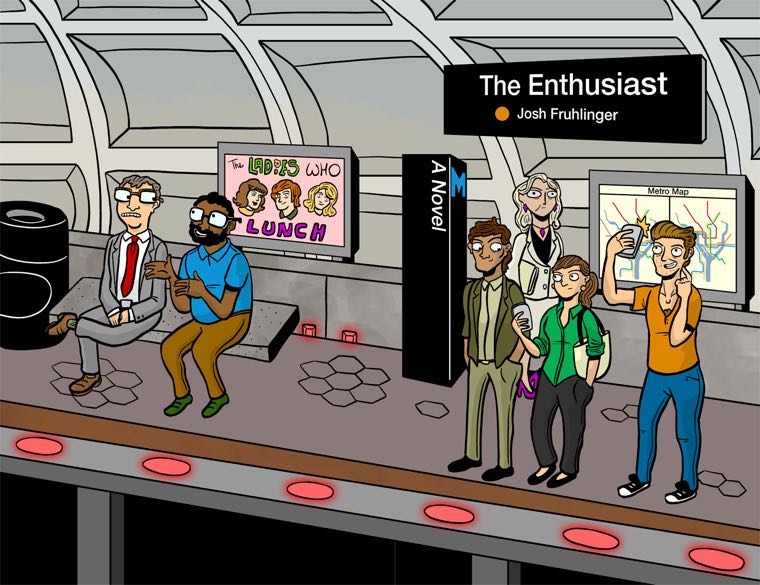
Josh Fruhlinger, whose blog The Comics Curmudgeon is one of the few things I regularly read on the Internet, wrote a book called The Enthusiast a while back. I haven't read it yet, but it's on my list to get.
He wrote a very informative and interesting article about how much he made and how he did it. If you're a would-be or struggling writer, it's worth reading. Check it out here.
Wednesday, August 17, 2016
Christianity gets the bloody reboot it needs.
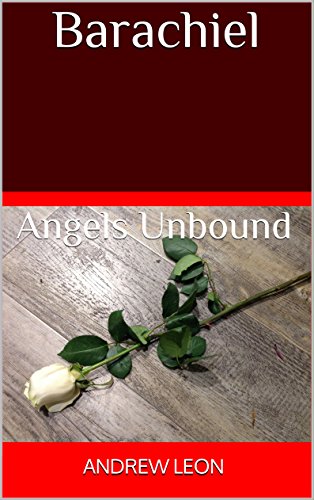
Angels Unbound is a series of books by Andrew Leon (The House On The Corner, Shadow Spinner) that takes his writing, and Bible-era history, in a startling -- and amazing -- new direction. It's like Game Of Thrones meets The Ten Commandments. There's a total of 26 books in the series -- each short, so all together it's like one book in lots of different stories -- and each tells a specific story about a specific angel, but altogether they tell a much larger, more detailed story.
Barachiel picks up the story where the Book Of Raziel -- the book kept by the Angel who stood by the side of God's throne -- is being brought into Alexandria, and it's hard to imagine just how much story and action Leon packs into such a short story; I read it in about 15 minutes and it had as much going on as any novel might, in that time; it just tore on through it.
I've said before and I'll say again: Leon's stuff deserves to be more widely-read, and would be great turned into movies or television shows; in the past he's done Spielberg-esque modern fantasy and then moved into stranger and darker stories, and this series feels like the culmination of what he's been heading for: a dark, strange, mysterious, epic story that combines fantasy, history, and religion into a heady mix.
What I particularly like is the realistic feel to it; so many religious stories feel sanitized, like they're middle-school pageants. Leon makes angels feel real the way Christopher Nolan made Batman and the Joker feel real: he creates beings and a world around them that you feel could exist (or maybe did). The angels and the humans are full of passion and energy, but even better, Leon makes the angels different. They aren't just humans with greater powers: his angels think and act differently, have different motivations and different passions than humans. Too often, people write superheroes, angels, wizards as though they were just humans with some neat tricks. But an angel wouldn't think or act like a human; they're a different creature altogether, and these books highlight that.
I'll be reviewing them all over time here, but you shouldn't wait: go start the whole series now, with Asbeel and work your way through them.
Friday, January 01, 2016
$25 for a doorstop? No thanks I'm not dumb.
I just read about this book, Barbara The Slut And Other Stories on Gawker and they said it was a great book.
So I clicked over to Amazon, where I saw that the book is being sold, in hardcover, for $24.85 on Amazon.
That’s just the book. Shipping is extra.
$24.85 for a book.
Ever wonder why there are so many articles extolling the virtues of “real” books?
$24.85 for a book that cost $3.50 to get to you.
PS Author’s generally get a higher payout of hardcover and paperback sales than electronic versions of books so the next time you read an essay from Stephen King on how great “real” books are keep in mind that he’s already worth $400,000,000.
Books should cost $9.99.
Monday, August 10, 2015
10 MInutes About "California" By Eden Lepucki
10 minutes that will start with mentioning again that I'm really putting off reading To Rise Again At A Decent Hour, which was a book I really thought sounded good, and which I like when I read it, but I find it not very compelling so I haven't really wanted to read it. Is that weird? It probably is. But it's probably also why the book was discounted to $2.99, which was the whole reason I bought it in the first place, which says a lot about books and discounting and readers and probably society.
So instead of reading To Rise Again this weekend, I was going to continue with Kurt Vonnegut, whose Welcome To The Monkey House contains very little science fiction, even for Kurt Vonnegut, whose science fiction has always been more fiction than science. Most of the short stories are almost Cheever-esque, perhaps with a few more twists than Cheever put in. In fact, Cheever's The Swimmer is Vonnegut-esque, so the two maybe have more in common than I would have thought at the start of that sentence.
In fact, Cheever had a story called The Enormous Radio, in which a woman's husband bought her an (enormous) radio that actually played conversations from other apartments in the building. The wife becomes more and more obsessed with this, while the husband spends too much money trying to fix the problem, and that worries him. This slowly tears at the husband and wife, who were happy before (or seemed to be; it's not clear whether the radio makes them unhappy or merely exposes their unhappiness.
Vonnegut's collection includes a story called Next Door in which a boy, left home alone for the first time, hears a loud radio from next door, and then a couple fighting over the sound of the radio. He gets more and more scared that the couple will hurt each other, so he calls the radio station and requests a song from the husband of the couple to the wife of the couple. This has disastrous and mildly surprising results.
So there's a more direct crossover between them, although saying that writers in the 40s-60s were connected because radios featured in their stories would be like saying writers today were connected because their characters used laptops, I suppose.
There is a husband and wife (how's that for a segue!) in California, too. Two husbands and two wives, so far, and lots and lots of dread. I began California because even Vonnegut's non-scifi stuff tends to be rather depressing, and I wanted something a bit different. California was not really the thing to choose, then: it's also depressing, already, but in a slightly different way.
At the start of the book, Frida and her husband Cal have abandoned Los Angeles, which (along with all of society) appears to have fallen apart nearly completely, and are living in a shed in the woods, where they've been for three years. They are trapping food (a bit) and growing food, and Frida has just discovered she's pregnant, which makes her remember when they met their neighbors a few years before -- 'neighbors' being a loose word for the distant acquaintances whose family of four also lives in the woods (and built the shed Frida and Cal are living in, and also who spied on Frida and Cal at awkward times -- and told Frida about it).
There's so much that's weirdly sad in the book, already. It's like a kaleidoscope, or maybe like looking at a brilliant, detailed miniature world that has fallen on the floor and shattered into barely-identifiable pieces. Frida has a turkey baster, made of glass, wrapped up and hidden with her 'artifacts,' one she bought just before the two abandoned Los Angeles, and which she keeps hidden from Cal. There's a traveling junk trader who gets tense when people ask him too many questions period. There's the vague, unsettling talk of just how far society has gone down hill -- stores that only took gold, medicines being only for the rich, malls overtaken by trees (or possibly). And it's all recent: Frida and Cal have been in the woods three years (having driven there and then driven their car as far away as the empty gas tank would let them, to lead people away from where they are living/hiding.)
I mentioned that I liked Footfall because it wasn't post-apocalyptic, but apocalyptic. I like stories that take place during the fall of civilization. A writer on IO9 recently suggested that we like postapocalyptic stories in part because of the possibility of relief they present: in a post-apocalyptic world, we might have to fight mutants or wander a desert or maybe get kidnapped by Charlize Theron or whatever, but we wouldn't have to watch our inbox fill up with emails and pay credit card bills and register for school and the like. The idea is that there would be almost a sense of freedom to a postapocalyptic world.
I'm not idiot enough to think I'd do well in something like that; as I've often said, my own skillset would qualify me for 'monster bait' after the end of the world. (In another Larry Niven book, a Senator helps set up a new society after the end of the world from a comet; he's picked because he knows the law and everyone respects him. So maybe there's hope for me.) And post-apocalypses make me sad because I think of how hard life would be. I have kids; I can't imagine raising kids in a wasteland glowing with nuclear fallout.
That's one of the things that is weird and depressing and scary already in California: Frida is pregnant, and their neighbors (?) have two kids. When they first meet, the neighbor lady asks Frida whether she is going to get pregnant, and when Frida hesitates -- after all, the world is falling apart-- the neighbor says "You didn't come out here to die, did you?" I sympathized with Frida: you wouldn't want to feel like you are giving up, but would you bring a kid into a dead world? Or a dying one? I know that the world Frida and Cal are living in seems kind of like pioneer times, but I don't romanticize pioneer times any more than I do postapocalyptic worlds. I'd have hated the 1880s, too. I'd have disliked anything before about 1957, I suspect.
What's more interesting to me is the why of liking apocalyptic stories. Following that IO9 writer's idea, I spent some time wondering about why I might find these stories enjoyable, if a bit depressing. Probably it's because I've got so much going on, especially over the last year or so. If life is hectic, or hard, or challenging, it can be escapist to see how people deal with even harder troubles. It's a lot worse, I suppose, to have elephants invade the Earth or have to flee the cities after some (as yet unknown) disaster than it is to try to fit into a new firm or have a jury trial or worry about whether I'm doing everything I can for Mr F or Mr Bunches. So reading books like this may be a way of putting my own life into perspective.
So instead of reading To Rise Again this weekend, I was going to continue with Kurt Vonnegut, whose Welcome To The Monkey House contains very little science fiction, even for Kurt Vonnegut, whose science fiction has always been more fiction than science. Most of the short stories are almost Cheever-esque, perhaps with a few more twists than Cheever put in. In fact, Cheever's The Swimmer is Vonnegut-esque, so the two maybe have more in common than I would have thought at the start of that sentence.
In fact, Cheever had a story called The Enormous Radio, in which a woman's husband bought her an (enormous) radio that actually played conversations from other apartments in the building. The wife becomes more and more obsessed with this, while the husband spends too much money trying to fix the problem, and that worries him. This slowly tears at the husband and wife, who were happy before (or seemed to be; it's not clear whether the radio makes them unhappy or merely exposes their unhappiness.
Vonnegut's collection includes a story called Next Door in which a boy, left home alone for the first time, hears a loud radio from next door, and then a couple fighting over the sound of the radio. He gets more and more scared that the couple will hurt each other, so he calls the radio station and requests a song from the husband of the couple to the wife of the couple. This has disastrous and mildly surprising results.
So there's a more direct crossover between them, although saying that writers in the 40s-60s were connected because radios featured in their stories would be like saying writers today were connected because their characters used laptops, I suppose.
There is a husband and wife (how's that for a segue!) in California, too. Two husbands and two wives, so far, and lots and lots of dread. I began California because even Vonnegut's non-scifi stuff tends to be rather depressing, and I wanted something a bit different. California was not really the thing to choose, then: it's also depressing, already, but in a slightly different way.
At the start of the book, Frida and her husband Cal have abandoned Los Angeles, which (along with all of society) appears to have fallen apart nearly completely, and are living in a shed in the woods, where they've been for three years. They are trapping food (a bit) and growing food, and Frida has just discovered she's pregnant, which makes her remember when they met their neighbors a few years before -- 'neighbors' being a loose word for the distant acquaintances whose family of four also lives in the woods (and built the shed Frida and Cal are living in, and also who spied on Frida and Cal at awkward times -- and told Frida about it).
There's so much that's weirdly sad in the book, already. It's like a kaleidoscope, or maybe like looking at a brilliant, detailed miniature world that has fallen on the floor and shattered into barely-identifiable pieces. Frida has a turkey baster, made of glass, wrapped up and hidden with her 'artifacts,' one she bought just before the two abandoned Los Angeles, and which she keeps hidden from Cal. There's a traveling junk trader who gets tense when people ask him too many questions period. There's the vague, unsettling talk of just how far society has gone down hill -- stores that only took gold, medicines being only for the rich, malls overtaken by trees (or possibly). And it's all recent: Frida and Cal have been in the woods three years (having driven there and then driven their car as far away as the empty gas tank would let them, to lead people away from where they are living/hiding.)
I mentioned that I liked Footfall because it wasn't post-apocalyptic, but apocalyptic. I like stories that take place during the fall of civilization. A writer on IO9 recently suggested that we like postapocalyptic stories in part because of the possibility of relief they present: in a post-apocalyptic world, we might have to fight mutants or wander a desert or maybe get kidnapped by Charlize Theron or whatever, but we wouldn't have to watch our inbox fill up with emails and pay credit card bills and register for school and the like. The idea is that there would be almost a sense of freedom to a postapocalyptic world.
I'm not idiot enough to think I'd do well in something like that; as I've often said, my own skillset would qualify me for 'monster bait' after the end of the world. (In another Larry Niven book, a Senator helps set up a new society after the end of the world from a comet; he's picked because he knows the law and everyone respects him. So maybe there's hope for me.) And post-apocalypses make me sad because I think of how hard life would be. I have kids; I can't imagine raising kids in a wasteland glowing with nuclear fallout.
That's one of the things that is weird and depressing and scary already in California: Frida is pregnant, and their neighbors (?) have two kids. When they first meet, the neighbor lady asks Frida whether she is going to get pregnant, and when Frida hesitates -- after all, the world is falling apart-- the neighbor says "You didn't come out here to die, did you?" I sympathized with Frida: you wouldn't want to feel like you are giving up, but would you bring a kid into a dead world? Or a dying one? I know that the world Frida and Cal are living in seems kind of like pioneer times, but I don't romanticize pioneer times any more than I do postapocalyptic worlds. I'd have hated the 1880s, too. I'd have disliked anything before about 1957, I suspect.
What's more interesting to me is the why of liking apocalyptic stories. Following that IO9 writer's idea, I spent some time wondering about why I might find these stories enjoyable, if a bit depressing. Probably it's because I've got so much going on, especially over the last year or so. If life is hectic, or hard, or challenging, it can be escapist to see how people deal with even harder troubles. It's a lot worse, I suppose, to have elephants invade the Earth or have to flee the cities after some (as yet unknown) disaster than it is to try to fit into a new firm or have a jury trial or worry about whether I'm doing everything I can for Mr F or Mr Bunches. So reading books like this may be a way of putting my own life into perspective.
Monday, June 29, 2015
10 Minutes About "It" by Stephen King
I've been listening to "It" on audiobook off and on this spring & summer. "Off and on" because I borrow it from the library on audio and you only get it for fourteen days, tops. If someone else has requested it during that time you have to wait until your turn comes around again. So the last time I listened to the book was at the end of April during my trips to and from my trial up north. I got about 1/3 of the way through and continued this latest time, when I got through another 1/3 before my time expired.
I'm enjoying the book pretty well; I like Stephen King, and King has become sort of the de facto horror guy for me, to the point where I don't think much about other horror authors at all. I like King's stuff so much that many horror books suffer by comparsion -- even those of his son, Joe Hill. (I like Hill's collection of short stories, 20th Century Ghosts much more than I liked his novel Heart Shaped Box, which I found to be pedestrian in concept and execution.) King tends to go for the gross-out too much (his "shit weasels" almost made me give up on Dreamcatcher) and when he's bad he's really bad (Dreamcatcher, again) but when he's good he's worth all the bad stuff.
Bad stuff like the current, interminable, part of It that I was slogging through when my turn expired for the book. And bad stuff like the 'flashback nature' of the story.
First the slog: I'm at the part of the book where one of the main characters is recounting a story his dad told him back when he was fifteen (so it's the guy telling the story telling a story about how someone else told a story, which is never a good way to tell a story. You've heard show don't tell? If you're three removes from the action, it's always boring.) But this story goes on FOREVER. And EVER AND EVER AND EVER. Seriously, I was on it for about three days of audiobook time (audiobook time is when I go for my occasional exercise walks, or driving). And the point of the story apparently was to get to the part [SPOILER ALERT!] where the guy's dad saw the same "it" monster the guy did, only 60 years ago or something.
YAWN. The whole point of the story has been that this thing is making the entire town evil, etc., so to say oh yeah it was around sixty years ago too? We get it. If this part of the story is going somewhere, I can't see it.
PLUS, the other part of this flashback to a flashback that really stuck me -- jarred me right out of the story-- was that the kid listening to his dad had, about 4 years before, encountered the monster himself. Then he's listening to his dad tell this story, and when dad gets to the I saw a monster part, the kid says how he had totally forgotten that he'd seen a monster until then.
Now, I am willing to suspend my disbelief to read a story and believe that there will be a monster haunting Derry, New Hampshire. But 'suspension of disbelief' doesn't extend to "believe any old stupid thing thrown in for narrative purposes." Am I supposed to think an 11-year-old has a run in with a giant monster that tries to kill him and he narrowly escapes and he forgot it entirely within four years?
Back when I was 18, I had a car accident in which I had a near-miss with a tree: a guy cut me off and I swerved and I skidded on ice and I nearly hit a tree off the road and came this close to dying. I remember it vividly, 28 years later ... and there were no giant monsters there to help keep things fresh in my brain.
I'm assuming King was going for something there, with the Oh yeah I forgot until my dad mentioned a monster that I'd seen one too, but whatever it was, I don't get it and it was annoying enough that I can't believe it survived into the final version of the novel.
PLUS, another [SPOILER ALERT!]: the kid was sent to the place where he saw the monster by his dad. So when dad spills the beans about having seen the monster earlier, the kid thinks oh yeah hey I saw a monster too, I forgot that! but not HEY WAIT DAD YOU KNEW THERE WAS A MONSTER AND SENT ME THERE?
That's 10 minutes, but I don't want to risk forgetting about the other part of the story that bugs me: the telling it in flashback part. This has been bothering me all year, since I read The Last Summer Of The Camperdowns, which otherwise was a very good book, and now when I read It, and both of the stories do the same thing: they present a story in which the main character faces mortal danger, but the story is being told by that character in a flashback.
In Camperdowns, the main character is an adult and remembers when she was 11 and various terrible things happened, including a guy trying to murder her. A kid goes missing in their neighborhood and she suspects the guy and the guy is harassing her and tormenting her and we are seemingly to believe that he means her no good, but the fact that she is an adult looking back removes every bit of suspense from the story. And I thought well maybe suspense wasn't really the point except I'm pretty sure it was.
Then there's It, where I am sure suspense is the point. The story is told in flashbacks back-and-forth: present day (i.e. 1985) Derry, and 1957 Derry, when the main characters first became aware there is a monster. Each kid in 1957 is introduced also as an adult, and then we flash back to 1957 where they all ran into the monster, and there are plenty of scenes where the monster is after them, scenes which could be very suspenseful and terrifying except that we already know each of these kids survives their own particular brush with the monster in 1957, and now have to come back to fight the monster in 1985.
I keep thinking, as I listen to it, how much better the book would be if I didn't know the kids survive. I mean, it's bad enough when you're reading a horror story or watching a movie and you know, intellectually, that the main character will survive, because they are the main character, but at least your face isn't rubbed in it by telling the story in flashback.
Anyway, this all makes it sound like the book is no good, and in fact it's really very good. I'm enjoying it a lot. That's kind of a testament to how great King is when he's on, because a book with those kind of significant flaws has to be really awesome to make it over those hurdles. Still, how much better would it be if I didn't have to work so hard to get to the parts of the book that don't suck?
That's10 21 minutes.
I'm enjoying the book pretty well; I like Stephen King, and King has become sort of the de facto horror guy for me, to the point where I don't think much about other horror authors at all. I like King's stuff so much that many horror books suffer by comparsion -- even those of his son, Joe Hill. (I like Hill's collection of short stories, 20th Century Ghosts much more than I liked his novel Heart Shaped Box, which I found to be pedestrian in concept and execution.) King tends to go for the gross-out too much (his "shit weasels" almost made me give up on Dreamcatcher) and when he's bad he's really bad (Dreamcatcher, again) but when he's good he's worth all the bad stuff.
Bad stuff like the current, interminable, part of It that I was slogging through when my turn expired for the book. And bad stuff like the 'flashback nature' of the story.
First the slog: I'm at the part of the book where one of the main characters is recounting a story his dad told him back when he was fifteen (so it's the guy telling the story telling a story about how someone else told a story, which is never a good way to tell a story. You've heard show don't tell? If you're three removes from the action, it's always boring.) But this story goes on FOREVER. And EVER AND EVER AND EVER. Seriously, I was on it for about three days of audiobook time (audiobook time is when I go for my occasional exercise walks, or driving). And the point of the story apparently was to get to the part [SPOILER ALERT!] where the guy's dad saw the same "it" monster the guy did, only 60 years ago or something.
YAWN. The whole point of the story has been that this thing is making the entire town evil, etc., so to say oh yeah it was around sixty years ago too? We get it. If this part of the story is going somewhere, I can't see it.
PLUS, the other part of this flashback to a flashback that really stuck me -- jarred me right out of the story-- was that the kid listening to his dad had, about 4 years before, encountered the monster himself. Then he's listening to his dad tell this story, and when dad gets to the I saw a monster part, the kid says how he had totally forgotten that he'd seen a monster until then.
Now, I am willing to suspend my disbelief to read a story and believe that there will be a monster haunting Derry, New Hampshire. But 'suspension of disbelief' doesn't extend to "believe any old stupid thing thrown in for narrative purposes." Am I supposed to think an 11-year-old has a run in with a giant monster that tries to kill him and he narrowly escapes and he forgot it entirely within four years?
Back when I was 18, I had a car accident in which I had a near-miss with a tree: a guy cut me off and I swerved and I skidded on ice and I nearly hit a tree off the road and came this close to dying. I remember it vividly, 28 years later ... and there were no giant monsters there to help keep things fresh in my brain.
I'm assuming King was going for something there, with the Oh yeah I forgot until my dad mentioned a monster that I'd seen one too, but whatever it was, I don't get it and it was annoying enough that I can't believe it survived into the final version of the novel.
PLUS, another [SPOILER ALERT!]: the kid was sent to the place where he saw the monster by his dad. So when dad spills the beans about having seen the monster earlier, the kid thinks oh yeah hey I saw a monster too, I forgot that! but not HEY WAIT DAD YOU KNEW THERE WAS A MONSTER AND SENT ME THERE?
That's 10 minutes, but I don't want to risk forgetting about the other part of the story that bugs me: the telling it in flashback part. This has been bothering me all year, since I read The Last Summer Of The Camperdowns, which otherwise was a very good book, and now when I read It, and both of the stories do the same thing: they present a story in which the main character faces mortal danger, but the story is being told by that character in a flashback.
In Camperdowns, the main character is an adult and remembers when she was 11 and various terrible things happened, including a guy trying to murder her. A kid goes missing in their neighborhood and she suspects the guy and the guy is harassing her and tormenting her and we are seemingly to believe that he means her no good, but the fact that she is an adult looking back removes every bit of suspense from the story. And I thought well maybe suspense wasn't really the point except I'm pretty sure it was.
Then there's It, where I am sure suspense is the point. The story is told in flashbacks back-and-forth: present day (i.e. 1985) Derry, and 1957 Derry, when the main characters first became aware there is a monster. Each kid in 1957 is introduced also as an adult, and then we flash back to 1957 where they all ran into the monster, and there are plenty of scenes where the monster is after them, scenes which could be very suspenseful and terrifying except that we already know each of these kids survives their own particular brush with the monster in 1957, and now have to come back to fight the monster in 1985.
I keep thinking, as I listen to it, how much better the book would be if I didn't know the kids survive. I mean, it's bad enough when you're reading a horror story or watching a movie and you know, intellectually, that the main character will survive, because they are the main character, but at least your face isn't rubbed in it by telling the story in flashback.
Anyway, this all makes it sound like the book is no good, and in fact it's really very good. I'm enjoying it a lot. That's kind of a testament to how great King is when he's on, because a book with those kind of significant flaws has to be really awesome to make it over those hurdles. Still, how much better would it be if I didn't have to work so hard to get to the parts of the book that don't suck?
That's
Monday, June 15, 2015
10 (more) Minutes About "The City And The City"
I finished The City And The City the other day and I was sort of a little disappointed [SPOILER ALERT!] by who one of the bad guys turned out to be. It's really a very very good mystery story, but in the end the revelation of who is behind some of the killings and mysterious doings came kind of out of left field.
Or possibly it did. One problem with reading as slowly as I do is that it can be hard to keep track of stories after a while. I used to reThe City And The City I read even more slowly than that. So it's possible that early on in the book there were enough clues that one of the culprits was involved and more careful/quicker readers might not have been disappointed by the feeling like this part of the conspiracy was sort of pulled out of China Mieville's butt.
ad much more quickly, but these days I'm often so tired, as a result of raising the boys or my job or my asthma or all three combined, that it's hard to focus on stuff that's dense or requires a lot of thinking. So I read books more slowly and books like
The thing about mysteries is that you have to give the readers the clues to solve them, even if I, personally, never can solve them. I admit I am an annoying person to watch a cop show or mystery with, or read a mystery book with (as Sweetie and I do in our private book club.) I always suspect everyone. I am naturally suspicious anyway and kind of paranoid, and when you tell me that there is a murder or something and that someone (even a fictional someone committing a fictional something) did it, I trust nobody.
Which means two things, here. First, I naturally assume everyone who appears in a story is the killer. And then I suspect the person least likely to be the killer, like the protagonist, or his elderly mom, or whoever. Then I suspect the person most likely to be the killer on the grounds that I'm reading too much into this and obviously the person who is obviously the killer is, well, obviously the killer.
So there's that. But there's also then the fact that if we make it to the end of the mystery, as I did with The City And The City, and the bad guy is revealed, and I'm saying Huh? Who's that? then the person was too hidden, because I'm not that clueless, to have forgotten a major part of the story.
So the killer and his or her henchman have to be revealed at some point in the story and made just a big enough deal of that you could have, if you wanted to, figured it out. You can't just have the main character brush by a guy in a hat or something on page one and on page 457 say It was the hat guy all along.
NOTE: There are no hat guys in The City And The City. I'm way past the spoilers.
So that was how I felt when a part of the mystery was revealed: a bit cheaped out, like the time I watched The Bone Collector and you had to pay attention to the opening credits to know who the killer was. WHO WATCHES THE OPENING CREDITS? NOBODY. Not me.
The rest of the book, though, was incredible. The concept ended up being far less sci-fi and far more fantastic or speculative fiction. In fact, I wouldn't call it scifi at all, and I think the people over at IO9 or whoever made the list I saw it on (I got it from a list of scifi books that people who don't like scifi should read) were wrong. Calling the book scifi makes you think there'll be aliens or spaceships or time travel or something. There was none of that, and the idea that the book was scifi made me sort of expect that Breach (which is a sort of superpolice in the book) might be aliens, and I entertained many similar theories about what was going on -- when, had you told me the book was merely speculative fiction instead of scifi I would've been just fine with it. The book was not scifi, at all; it was instead a superclever story about two cities that co-exist in and around each other, with people living in each forbidden to know anything about the other, so they 'unsee' the other city all the time, and the way that concept plays out in the book made what would've been a pretty good mystery story into a phenomenal one.
That's 10 minutes.
Or possibly it did. One problem with reading as slowly as I do is that it can be hard to keep track of stories after a while. I used to reThe City And The City I read even more slowly than that. So it's possible that early on in the book there were enough clues that one of the culprits was involved and more careful/quicker readers might not have been disappointed by the feeling like this part of the conspiracy was sort of pulled out of China Mieville's butt.
ad much more quickly, but these days I'm often so tired, as a result of raising the boys or my job or my asthma or all three combined, that it's hard to focus on stuff that's dense or requires a lot of thinking. So I read books more slowly and books like
The thing about mysteries is that you have to give the readers the clues to solve them, even if I, personally, never can solve them. I admit I am an annoying person to watch a cop show or mystery with, or read a mystery book with (as Sweetie and I do in our private book club.) I always suspect everyone. I am naturally suspicious anyway and kind of paranoid, and when you tell me that there is a murder or something and that someone (even a fictional someone committing a fictional something) did it, I trust nobody.
Which means two things, here. First, I naturally assume everyone who appears in a story is the killer. And then I suspect the person least likely to be the killer, like the protagonist, or his elderly mom, or whoever. Then I suspect the person most likely to be the killer on the grounds that I'm reading too much into this and obviously the person who is obviously the killer is, well, obviously the killer.
So there's that. But there's also then the fact that if we make it to the end of the mystery, as I did with The City And The City, and the bad guy is revealed, and I'm saying Huh? Who's that? then the person was too hidden, because I'm not that clueless, to have forgotten a major part of the story.
So the killer and his or her henchman have to be revealed at some point in the story and made just a big enough deal of that you could have, if you wanted to, figured it out. You can't just have the main character brush by a guy in a hat or something on page one and on page 457 say It was the hat guy all along.
NOTE: There are no hat guys in The City And The City. I'm way past the spoilers.
So that was how I felt when a part of the mystery was revealed: a bit cheaped out, like the time I watched The Bone Collector and you had to pay attention to the opening credits to know who the killer was. WHO WATCHES THE OPENING CREDITS? NOBODY. Not me.
The rest of the book, though, was incredible. The concept ended up being far less sci-fi and far more fantastic or speculative fiction. In fact, I wouldn't call it scifi at all, and I think the people over at IO9 or whoever made the list I saw it on (I got it from a list of scifi books that people who don't like scifi should read) were wrong. Calling the book scifi makes you think there'll be aliens or spaceships or time travel or something. There was none of that, and the idea that the book was scifi made me sort of expect that Breach (which is a sort of superpolice in the book) might be aliens, and I entertained many similar theories about what was going on -- when, had you told me the book was merely speculative fiction instead of scifi I would've been just fine with it. The book was not scifi, at all; it was instead a superclever story about two cities that co-exist in and around each other, with people living in each forbidden to know anything about the other, so they 'unsee' the other city all the time, and the way that concept plays out in the book made what would've been a pretty good mystery story into a phenomenal one.
That's 10 minutes.
Tuesday, March 03, 2015
Why I'm Not Buying Your Book
I've been looking the past few days for a new, interesting book to read, for after I finish Alice + Freda Forever, maybe, and I was thinking along the lines of science fiction or fantasy, because it has been a long time since I read a great scifi or fantasy novel (other than Nick Harkaway's books, which are phenomenal, of course.)
So when IO9 had a listing of the scifi and fantasy books you (meaning I) can't afford to miss in March, I figured I'd go check it out. And then I figured I'd share why I pre-rejected or pre-accepted the books. Most of what's below is IO9's original stuff, with my reasoning in red.
__________________
This book takes place in an underground, gaslit city where historians are incredibly important, because knowledge of the past is power. And when a major historian is murdered, Inspector Liesl Malone finds herself getting stonewalled by the government and threatened with death. Publishers Weekly gave it a starred review and said, "The subtly fantastical story is resplendent with surprisingly deep villains, political corruption, and a gripping whodunit feel."
"Because knowledge of the past is power." I almost didn't get beyond 'underground, gaslit city. I don't like underground, gaslit cities. Steampunk is a hard sell for me, and mysterious underground cities where people buy weird things from dimly-lit booths and everyone wears tophats (I assume) is an even harder one. But the concept of knowledge somehow directly equating to power made me immediately move on. Gimmick! How would that work? "I know what happened 100 years ago and therefore am powerful." "TELL ME!" "Ok, wait, no... nice try!" Power/wealth/influence requires scarcity, and scarcity requires a thing that cannot be shared without diminishing it. Plus this sounds too much like a 7th-grade history teacher got tired of kids saying "Why do we have to know about the Teapot Dome Scandal?" I'm sure the sequel will be set on a series of floating cloud castles, where knowledge of addition and subtraction equals power. The Primary School Trilogy.
The author of The Remains of the Day is back with a fantasy novel, full of ogres and dragons — an old couple set off on a quest to find their son, but we soon realize their real task is to defeat a dragon and dispel the mist that's destroying the land. Everybody is praising this book's fairytale weirdness, and Neil Gaiman calls it "an exceptional novel."
You had me at 'Kazuo Ishiguro.' Who should actually be referred to as the author of Never Let Me Go, which I assume was a better book because I read that one and not his other one. But a great writer with dragons and ogres and a weird mist? I'm in.
Smith is one of the British space opera writers who hasn't caught on as much stateside, but this book sounds like a rollicking great time. This novel takes place partly in the present day, as a man with incredible powers hunts down a similarly powered serial killer — and they're both empowered by strange alien technology. But other storylines take place thousands of years ago, as demons attack Ancient Britain and the far future, as a ruthless power struggle unfolds in space, centuries after the destruction of Earth.
If you put the word "quantum" in it, I'll read it. (EXACTLY AS PREDICTED BY THE AMAZING AUTHOR WHO WROTE THAT SHORT STORY QUANTUM EVERYTHING! WOW!) But the story sounds good, too, and I am in the mood for a sprawling, time-bending epic.
Gilman's first Ben Jonson adventure was a finalist for the Shirley Jackson Award — now here's the second, in which Shakespeare's contemporary writes a play in which the Prince of Wales himself will play Oberon, the King of Faerie. Except that the zombie playwright Kit Marlowe gets involved, and everything goes rather badly.
Ugh. No "real" people in fake adventures. League Of Extraordinary Gentlemen did that and it sucked and it's over.
I couldn't possibly be more excited about this novel from the author of Something More Than Night. This takes place in an alternate universe where the Dutch empire has conquered everything, thanks to its clockwork soldiers, the Clakkers. But 200 years later, the Clakkers finally want to be set free. Publishers Weekly's starred review says, "Tregillis's complex setting is elegantly delivered, and the rich characters and gripping story really make this tale soar." Read an excerpt.
At first I skipped right over this because the cover looked like it was some sort of Nazi reference and I don't read alternate-WWII books. Or actual WWII books. Or any book that mentions WWII. But I also was put off by the "Alchemy War series, Book 1," despite my looking for an epic story. The thing about a series is I don't know that it's going to be good all the way, or that it will ever finish. Or that it's not going to be a billion pages long. Battlestar Galactica, the new series, undid several years of good TV with one awful awful finale. George R.R. Martin is never going to finish Game Of Thrones (a series that doesn't interest me at all, for numerous reasons including that everyone else is going nuts over them), and when you're talking about a writer I've never heard of, that's a lot of trust to place in something going right. Then, on reading the actual synopsis, I think it actually is an alternate World War in which the Dutch are the Nazis.
Richards is one of the most prolific Doctor Who book authors and editors, but he joins Paul Cornell, Rebecca Levene and Ben Aaronovitch as the author of standalone fiction. In this book, the Nazis are winning World War II, the way they usually do in alternate histories — but this time, they're helped by strange beings from beyond. And Richards' deep knowledge of World War II history reportedly adds a lot to this tale. Says SFSite, "The Suicide Exhibition is the kind of book which transcends its well trod themes to provide something that is always familiar, but still capable of producing a surprise."
The actual IO9 article had prices and links to buy these books. I've cut those out of this post. But I want to say something about how outrageous the prices are. Most of these books are $12, at least. Some are twenty dollars.
Books should cost $9.99, for digital books, at least, and I'm a firm believer that all books should be digital. I like walking through bookstores and libraries, a lot -- but I only buy hard copies of books now as collector's items (I'm going and rebuying used copies of the books I loved growing up, slowly.) The reason books aren't $9.99 is because Steve Jobs and Apple got together to violate antitrust laws to break Amazon's grip on the book market, and in the end only consumers lost. That's one of the many reasons I despise Steve Jobs. That and his couch.
Anyway, you can probably guess why I didn't bother reading the description of this book. NO MORE WORLD WAR II ALTERNATE ENDINGS. There are other wars and other plots. Why not at least do an alternate World War I? There are 15 different pop culture things featuring alternate WWI stories. I bet there are 33 billion alternate World War II stories. I think one of the clearest ways to demonstrate that you are creatively bankrupt is to say your story is set in an alternate World War II. You could only make it worse if you have historical figures caught up in a gimmick:
John Quincy Adams, Space President, couldn't believe his luck! Here was the United States' newly-elected dictator for life, Adolf Hitler, and it was obvious Hitler had ignored the requirement that everyone have their Seeing Cat with them...
GOD I felt a part of my brain die just writing that. I bet that'll be the next series from that author who wrote that stupid Divergent stuff.
The actual IO9 article had prices and links to buy these books. I've cut those out of this post. But I want to say something about how outrageous the prices are. Most of these books are $12, at least. Some are twenty dollars.
Books should cost $9.99, for digital books, at least, and I'm a firm believer that all books should be digital. I like walking through bookstores and libraries, a lot -- but I only buy hard copies of books now as collector's items (I'm going and rebuying used copies of the books I loved growing up, slowly.) The reason books aren't $9.99 is because Steve Jobs and Apple got together to violate antitrust laws to break Amazon's grip on the book market, and in the end only consumers lost. That's one of the many reasons I despise Steve Jobs. That and his couch.
Anyway, you can probably guess why I didn't bother reading the description of this book. NO MORE WORLD WAR II ALTERNATE ENDINGS. There are other wars and other plots. Why not at least do an alternate World War I? There are 15 different pop culture things featuring alternate WWI stories. I bet there are 33 billion alternate World War II stories. I think one of the clearest ways to demonstrate that you are creatively bankrupt is to say your story is set in an alternate World War II. You could only make it worse if you have historical figures caught up in a gimmick:
John Quincy Adams, Space President, couldn't believe his luck! Here was the United States' newly-elected dictator for life, Adolf Hitler, and it was obvious Hitler had ignored the requirement that everyone have their Seeing Cat with them...
GOD I felt a part of my brain die just writing that. I bet that'll be the next series from that author who wrote that stupid Divergent stuff.
The bestselling novelist takes us to 1890s Paris, where a woman fleeing her abusive husband finds herself possessed by a 16th century witch, La Lune. This ex-courtesan ghost opens up a secret world of darkness to the fugitive Sandrine. Kirkus calls this book, "Sensual, evocative, mysterious and haunting."
"Sandrine... that's a really pretty name for an industrial solvent."
Also, I started listening to an audiobook about some Paris king capturing a mermaid and the first 17,000 pages were a description of a parade or something. Mention "Paris" in scifi or fantasy now and I assume that you are going to spend 98% of your book demonstrating to me how thorough your research was. Maybe put some effort into moving the story along?
The only thing worse than trying to immerse me in a flood of period detail is the spotty, half-a**ed insertion of some lame attempt to demonstrate the era the story is set in. Movies do this all the time, having a character make a pointed reference to his or her "Discman" to emphasize that it's 1997.
"Sandrine... that's a really pretty name for an industrial solvent."
Also, I started listening to an audiobook about some Paris king capturing a mermaid and the first 17,000 pages were a description of a parade or something. Mention "Paris" in scifi or fantasy now and I assume that you are going to spend 98% of your book demonstrating to me how thorough your research was. Maybe put some effort into moving the story along?
The only thing worse than trying to immerse me in a flood of period detail is the spotty, half-a**ed insertion of some lame attempt to demonstrate the era the story is set in. Movies do this all the time, having a character make a pointed reference to his or her "Discman" to emphasize that it's 1997.
Connolly's Twenty Palaces books were a refreshingly dark spin on urban fantasy tropes. And now he's following up his self-published Great Way trilogy with another self-published book — his heroine, Marley Jacobs, has given up hunting supernatural creatures and tried to turn Seattle into a peaceful place where humans and the undead can exist together in peace. Too bad someone isn't down with the program.
I love the title but then the more I thought about it the more I thought It's probably just a Sookie Stackhouse ripoff. Plus I don't like when people say "urban fantasy." I don't know exactly what it means but I don't like it.
If you're a regular io9 reader, you've seen Valentine's recaps of Sleepy Hollow and other shows — but before that happened, you also saw us praise her captivating fantasy novel Mecanique. Now she's written a near-future thriller set in a future where the lines between celebrity and diplomacy have become blurred. Suyana is the Face of the United Amazonia Rainforest Confederation, a target for paparazzi but also assassination attempts. Soon, though, she's forced to go on the run with a young paparazzo to unravel a conspiracy. Read an excerpt here.
In a future where celebrity and diplomacy have become blurred?
Also, this is probably a good time to expound on why I hate gimmick scifi and fantasy stories. A gimmick is anything that the story revolves around that is a tweak or twist on the normal world -- everything from Logan's Run and it's "we kill everyone over 25" plot to the moronic Hunger Games "teens fighting to feed sector 12" or whatever.
You can tell a gimmick story because the gimmick is front-and-center: any description of the book/movie/TV show focuses on the gimmick. Here's the actual description from the Amazon page for The Hunger Games:
The plot, characters, etc., take a backseat to the gimmick. This is something I first noticed in horror movies: many horror movies come up with something they think is scary, like the catacombs below Paris, and then figure "Eh, whatever we do in that setting will be scary," and the movie sucks because nobody gave any thought to how to actually make it interesting. This is what happened with one of the worst ripoff horror movies ever, White Noise, a/k/a Here Is A Scary Sound.
Gimmick stories are even worse when the gimmick makes no sense. How could a government like The Hunger Games survive? In Roman times, the people who fought to the death were not from the general populace. In modern times, dictators who starve their people don't offer them a secret way out for a select few, if only because offering people hope of moving up in the ranks is counterproductive for totalitarianism.
Great stories rarely revolve around a gimmick. Star Wars. The Lord Of The Rings. His Dark Materials. The Hitchhikers' Trilogy... these are books that tell phenomenal stories, but the quirks of their society are secondary to the plot and characters.
If a gimmick gets mentioned too quickly or prominently in the description, I rarely read more.
In a future where celebrity and diplomacy have become blurred?
Also, this is probably a good time to expound on why I hate gimmick scifi and fantasy stories. A gimmick is anything that the story revolves around that is a tweak or twist on the normal world -- everything from Logan's Run and it's "we kill everyone over 25" plot to the moronic Hunger Games "teens fighting to feed sector 12" or whatever.
You can tell a gimmick story because the gimmick is front-and-center: any description of the book/movie/TV show focuses on the gimmick. Here's the actual description from the Amazon page for The Hunger Games:
In the ruins of a place once known as North America lies the nation of Panem, a shining Capitol surrounded by twelve outlying districts. Long ago the districts waged war on the Capitol and were defeated. As part of the surrender terms, each district agreed to send one boy and one girl to appear in an annual televised event called, "The Hunger Games,"
The plot, characters, etc., take a backseat to the gimmick. This is something I first noticed in horror movies: many horror movies come up with something they think is scary, like the catacombs below Paris, and then figure "Eh, whatever we do in that setting will be scary," and the movie sucks because nobody gave any thought to how to actually make it interesting. This is what happened with one of the worst ripoff horror movies ever, White Noise, a/k/a Here Is A Scary Sound.
Gimmick stories are even worse when the gimmick makes no sense. How could a government like The Hunger Games survive? In Roman times, the people who fought to the death were not from the general populace. In modern times, dictators who starve their people don't offer them a secret way out for a select few, if only because offering people hope of moving up in the ranks is counterproductive for totalitarianism.
Great stories rarely revolve around a gimmick. Star Wars. The Lord Of The Rings. His Dark Materials. The Hitchhikers' Trilogy... these are books that tell phenomenal stories, but the quirks of their society are secondary to the plot and characters.
If a gimmick gets mentioned too quickly or prominently in the description, I rarely read more.
Even for Dan Simmons, this sounds like an odd sort of novel. Famous author Henry James and famed detective Sherlock Holmes team up ...
Nope. Not even reading the rest of this. If I was ever going to read Sherlock Holmes fan fiction, I'd want it to be the kind written by T. Rex of Dinosaur Comics.
You think you've had a bad breakup? You should see Henry. After his girlfriend Valerie leaves him, everything starts to fall apart — as in, reality itself begins to unravel. There's time travel, and other versions of Henry from the future, and everything is just whacked out. Henry's only hope to get his life back on track is to find his ex. Kirkus says, "An auspicious debut that blends a number of disparate-seeming tones into something surprisingly coherent—and moving."
I once wrote an essay about whether you had to call your novel "A Novel." (The entire thing is here.) In it, I posited that the reason people tack a novel onto the title of their book is to appeal to a certain kind of literary snob, and that the words a novel were a literary equivalent of the Prius Effect:
The "Prius Effect" is an actual thing: It refers to the oddly-shaped Prius car, and the fact that the Prius was oddly-shaped to emphasize that it was a hybrid, which, in turn, made people who wanted to buy hybrids more likely to buy a Prius, not because they were better cars but because they were immediately recognized as green: by buying a hybrid car, you are helping the environment, but by buying a Prius, you are helping the environment and telling everyone that you are helping the environment, the latter being very important to almost everyone who wants to buy a Prius.Notwithstanding that, this book actually sounded kind of interesting, although I ultimately passed because I guessed it might be YA.
Polly sets fire to the family farm to escape from her abusive father, and winds up taking sanctuary with her brother at a Shaker community — but then it turns out that she's their new Visionist, who can see mystical realities. The New York Times calls this book "transfixing" and praises its "meditative consideration of the value of hardship and the transformative nature of ecstasy."
Just... nothing in this description sounded appealing at all. But at least, thanks to the 'a novel,' you know it's a work of fiction!
This book sounds weird, in a really fun way — Tralane is a master of "archaeotechnology," the science of uncovering miracles from past ages. She lives in an age of magic, inside a "matriarchal imperium," and her life is devoted to peaceful scholarship. Until she gets pulled into a war, and has to go on the run with an alien peacekeeper.
This sounded awesome but for some reason you cannot buy it and you cannot wishlist it which means that I have no way of keeping track of it and ultimately I will probably never read it. So in this case I will not buy your book, Justina Robson, because you don't seem to want to sell it to me or make it possible for me to remember to buy it once you do want to sell it to me. IT ONLY MAKES ME WANT YOU MORE.
What's it like investigating crimes in Hell? Not surprisingly, it's Hellish.
There's more but that is the exact moment I stopped reading and moved on. I found the concept of a detective in Hell immediately so irritating it was like being poked in the eye by a sockful of hornets. And the more I think about it the worse it gets.
This strange YA book takes place in an alternate 1930s Australia,
That was all I needed, there.
Consider: unless you are familiar with real 1930s Australia, how would you know this is an alternate? Are the koalas Nazis who actually won World War II?
That was all I needed, there.
Consider: unless you are familiar with real 1930s Australia, how would you know this is an alternate? Are the koalas Nazis who actually won World War II?
The author of Eats, Shoots and Leaves writes a weird tale where a man suddenly finds his cat talking to him — and the cat tells him all sorts of secrets, including stuff about his wife's death, and a conspiracy by sinister forces.
This sounds like cat fan fiction, now. And it's by the author of a book about grammar. This person is basically an alternate version of Andrew Leon.* One who probably won WWII.
Just the title alone was enough to stop me, though. It just telegraphs how awful this book is going to be.
*I do buy Andrew's books. You should, too. He's got one involving a cat, if that's your thing. And it's a good story!
This sounds like cat fan fiction, now. And it's by the author of a book about grammar. This person is basically an alternate version of Andrew Leon.* One who probably won WWII.
Just the title alone was enough to stop me, though. It just telegraphs how awful this book is going to be.
*I do buy Andrew's books. You should, too. He's got one involving a cat, if that's your thing. And it's a good story!
Roza gets kidnapped by a mysterious man, and the only witness is Finn, who can't remember anything about what that man looked like. The opening paragraph pretty much won me over: "THE PEOPLE OF BONE GAP CALLED FINN A LOT OF THINGS, but none of them was his name. When he was little, they called him Spaceman. Sidetrack. Moonface. You. As he got older, they called him Pretty Boy. Loner. Brother. Dude." Read a big chunk of the book here.
Won me over, too. This sounds incredible.
What if there was a party drug that contained distilled magic? That's the intriguing premise of this debut novel that the publisher is calling "Breaking Bad meets Jim Butcher's The Dresden Files." Unfortunately, if you snort the magical drug Flex, you get one hell of a crash afterwards, in which the universe takes back whatever you've gotten from it. A rules-obsessed "bureaumancer" is forced to try this dangerous drug in order to save his badly burned daughter.Read an excerpt!
What if you wrote a book that wasn't a gimmicky ripoff of a bunch of movies you streamed on Netflix last week? I also would have accepted "Trainspotting meets Limitless," or Requiem for a Dream meets Lucy," or "Less Than Zero meets ... I don't know, Rocky?" I bet that rules-obsessed bureaumancer learns that ... sometimes you've gotta break the rules *record scratch*
An award-winning poet has written what sounds like a pretty intriguing dystopia — 400 years after some kind of calamity, everyone is born in twins. One twin is the Alpha, perfect and strong, and the other twin is a mutated Omega, who gets banished into special settlements. Feeling Fictional calls it "a great start to the series and it left me desperate to find out what will happen next."
OH GOD ARE WE DONE WITH GIMMICKY DYSTOPIAS? Also, as a society let's just agree to tell teenagers that they are not special and get over it, so we can quit killing trees for crap like this? In my day, we didn't need to read a book to realize just how much nobody understood us! We listened to punk rock music for that!
The author of Afterparty
Pretty sure that was not a book but was actually an album by that guy who briefly married Jessica Simpson's younger sister.
writes a dark fantasy in which the young Harrison is suppressing memories of some kind of encounter with Lovecraftian monsters in the depths of the ocean. He lost a leg, and now walks with a high-tech prosthetic, and he's afraid of the water. But then he goes to a new school, where he meets a ghost, learns a secret sign language, and gets a note from a half-fish, half-human member of the Dwellers, who live in the sea. Kirkus seemed to like it a lot.
... but actually this sounds pretty good. Hopefully there's no twins living underground in a world where Hitler actually won the war.
Pretty sure that was not a book but was actually an album by that guy who briefly married Jessica Simpson's younger sister.
writes a dark fantasy in which the young Harrison is suppressing memories of some kind of encounter with Lovecraftian monsters in the depths of the ocean. He lost a leg, and now walks with a high-tech prosthetic, and he's afraid of the water. But then he goes to a new school, where he meets a ghost, learns a secret sign language, and gets a note from a half-fish, half-human member of the Dwellers, who live in the sea. Kirkus seemed to like it a lot.
... but actually this sounds pretty good. Hopefully there's no twins living underground in a world where Hitler actually won the war.
The Booker Prize-shortlisted author writes a very pomo-sounding novel about a man named U. who is a "corporate anthropologist," studying the strange phenomena of our times for a giant corporation. He starts seeing weird connections between South Pacific cargo cults and an epidemic of dead parachutists. NPR says "the satiny glow of those passages gives a reader hope for some kind of fusion of meaning and feeling in a world that's too carefully restrained."Associated Press calls it "a dazzling array of sentences and paragraphs and snippets of memory and thought that aren't quite sure where they are. "
This sounded great until the reviews pointed out that it is going to be impossible to understand. It sounds like what you'd get if David Foster Wallace and James Joyce got really high and passed out on the keyboard one night. Of course, that's what all their books were like.
I can't imagine a worse review than someone saying that my writing is so good it gives the reader hope that eventually it will make some kind of sense.
This sounded great until the reviews pointed out that it is going to be impossible to understand. It sounds like what you'd get if David Foster Wallace and James Joyce got really high and passed out on the keyboard one night. Of course, that's what all their books were like.
I can't imagine a worse review than someone saying that my writing is so good it gives the reader hope that eventually it will make some kind of sense.
Prudence Eleanor Vilkas was born with a pair of wings, but they were surgically removed when she was little, leaving nasty scars — and then she discovers that she comes from a family of winged women, back in Lithuania. She goes on a quest to find her ancestors and the meaning of the wings that only one other person can see. Read an excerpt here.
I swear to God the boy and I once came up with almost exactly this same storyline, only it didn't involve Lithuania. So I couldn't read this because I'd be 100% sure the author had somehow read my mind, the way the NSA does. Also, it says "ancestors." I don't want to read a book about 'ancestors.' I got the feeling this book would have tons of description of Lithuanian customs.
The title was so familiar that I couldn't focus on what the book was about at all until I went and googled where it comes from, and then I was even more put off.
I swear to God the boy and I once came up with almost exactly this same storyline, only it didn't involve Lithuania. So I couldn't read this because I'd be 100% sure the author had somehow read my mind, the way the NSA does. Also, it says "ancestors." I don't want to read a book about 'ancestors.' I got the feeling this book would have tons of description of Lithuanian customs.
The title was so familiar that I couldn't focus on what the book was about at all until I went and googled where it comes from, and then I was even more put off.
This "contemporary noir" noir novel takes place in the hot, rainy summer of 2015. Twin sisters discover a strange mushroom growing out of their hall closet, and it's weirdly phosphorescent. The women, along with a fugitive au pair and an actress are forced to flee their row house when the infestation gets out of control — but soon the whole city is being overrun with these strange growths. Kirkus gives it a starred review and says, "This absorbing novel about a luminescent fungus affixes itself to your psyche like a spore and quickly spreads to your heart, setting everything in its wake aglow."
I wasn't sure what to make of this, because everything about it, from the 'contemporary noir' (?!?) to the mushroom gimmick seemed designed to turn me off, but it seemed compelling and ultimately I put it on the list to buy someday.
The crew of the "freetrader" ship Pelquin's Comet are a group of misfits, ex-soldiers and thieves, and they're always looking for the score that will make them rich. And maybe they've found it — a cache of secret alien technology that's worth a fortune. If only they can get to it before the government, various corporations, and just about everybody else.
No thanks I already saw Firefly, and obviously this writer did, too.
So a couple of books out of the list? That's not too bad, I suppose, although none of them sounded good enough for me to go buy now. *sigh* I guess it's back to binge-watching Phineas & Ferb all weekend.
No thanks I already saw Firefly, and obviously this writer did, too.
So a couple of books out of the list? That's not too bad, I suppose, although none of them sounded good enough for me to go buy now. *sigh* I guess it's back to binge-watching Phineas & Ferb all weekend.
Subscribe to:
Posts (Atom)