Sunday, November 13, 2016

Book 79: Boycott Herman Koch.

I started reading Dear Mr M about 6 weeks ago and only finished it this morning; I only finished it, to be honest, because I'd slowly worked my way through about 90% of the book and then got a notification that it was due at the library today and I couldn't renew it anymore. I figured it would be a shame to not finish it, and it would be too much work to go through the whole requesting-it-from-a-different-library thing, so I forced myself to read it.

As you'd guess, "forced myself to read it" doesn't imply a very good book, and Dear Mr M isn't very good. It's so far below the caliber of The Dinner and Summer House With Swimming Pool that I suspected it of being the kind of filler Gillian Flynn foisted off on people after Gone Girl. 

The problems with Dear Mr M are twofold, as I see it: first, Koch tries to cram a bit too much in, without bothering to give much of it any development or context; and second, Koch relies too much on his formula, which he has to pull out of his butt at the end like a poor man's M. Night Shymalan (or a poorer man's M. Night, since M. Night himself is a poor man's version of himself.)

There's spoilers here, but since you shouldn't read it don't worry about them. The basic story involves an author, Mr. M, who wrote a long time ago a true-crime book based on a teacher who had an affair with a student and then disappeared; the book implied that the students had killed the teacher.

One of the students, Herman, is now Mr M's downstairs neighbor, and the first part of (as well as much of the book in general) is told from Herman's perspective, telling Mr M what 'really' happened, it seems, and also creepily following Mr M's wife and daughter on vacation and sort of stalking Mr M. Mr M, meanwhile, is an elderly writer now with a much younger wife, and has just written a new book about 'the war' which apparently means WWII, a book that is getting only a small amount of publicity.

That is what passes for a plot, although there's a lot more hinted at or brushed over. A large part of the book deals with the students, Laura and Herman, and three trips they take to Laura's parent's vacation home, including the last one when it's just Laura and Herman and the teacher stops by and then disappears; this is, I suppose, intended to give us the background for the rest of the book? It felt, though, like a completely separate book, like it was completely unconnected with Mr M's present-day story.

That present-day story in the 2nd 2/3ds of the book focuses more on Mr M and what he thinks, and what he thinks is apparently some revisionist type of Nazi-sympathy thoughts; I have to say 'apparently' because at best Mr. M's seemingly-shocking thoughts are only ever hinted at: there is an interview in which he may have said some shocking things, and a TV blurb in which he may have said them, and there is a sort of revelation at one point that Mr M's dad was in the Nazi army as a Dutch collaborationist or something. It's all very murky and intended to set up the final twist in the plot, but it utterly fails to set up anything, which makes that final twist seem not shocking and obvious in retrospect, but glommed-on and hammy.

There are long distractions from the story that feel like there was possibly a whole other book here: there is a lengthy bit about one of the students whose mother dies in between two of the trips the students take. There is a lot about Laura's father, who has a TV job and is maybe sort of weird himself? There is a whole chapter of Mr. M's wife opting to stay home from a dinner with all the authors and watch a movie with their daughter instead. All of these feel like they're filler; they add nothing to the story and don't feel connected at all.  It's like Koch is just taking a bunch of sort-of ideas he's had and thrown them into the story.

Then there's the fact that the story is about a writer, who has written a book about a murder, and then run into the murderers themselves.  It's apparently supposed to be 'meta,' but it feels tired. Much like American writers using 9/11 in any way, it feels like there should be a rule: Nobody uses a writer as a main character. It's just too tough to do and when it doesn't work it distracts from the book. Here, it especially doesn't work. The idea that Mr M has somehow stumbled on the solution to the mystery of the missing teacher and that Herman is in some way threatening him disappears in a haze of red herrings and character sketches and long ruminations about what it is that writers do, so in the end it doesn't even matter if Mr M is a writer or wrote the story of the murder. It feels like mostly Mr M is a writer so Koch can talk about how writers write. It gets boring.

The final twist is this: It turns out that the teacher is going to frame Herman for his own murder; he visits the kids to set them up, with plans that he will bash his own head with a rock and freeze to death, so that the world will blame Herman. Only then, in like the last 5 pages, there's a twist on a twist!  Mr M, in the process of writing the book about the murder, gets a letter -- titled Dear Mr M!


-- and learns that the teacher has, in fact, framed Herman for the murder by disappearing, and that he's alive and well and is going to come back and pretend to have amnesia so that Herman gets blamed for maybe trying to kill him but he will be famous, so Mr M goes to see the teacher in Paris, where the teacher has been living under a bridge for several weeks. Mr M then shoves the teacher into the river and the teacher drowns. Just like that.

There's no real motive for it: Mr M sort of thinks about how he hates when people give him ideas for stories, and sort of thinks about how it would mess up his story, but he's already a famous author and has had other famous books. It's sort of hinted that maybe Mr M himself is a sociopath but we don't get much info about that other than a late-in-the-book fistfight between two old men. It's just a twist that existed for no reason than to be a twist.

The final few pages of the book seem to encapsulate the problems with the book in a nutshell: Mr M, having gotten a concussion in the fight, is dying on his couch. We get to see his thoughts, a maudlin short ramble about how he loved his mom more than his dad, but he doesn't want to see either of them and how would he explain the bruises on his face in Heaven and he's glad that there's nothing there, really.

I, as a reader, was disappointed that there was nothing there really.  Like Umberto Eco's Numero Zero nonsense or Flynn's The Grown-Up throwaway cash grab, Dear Mr M was bad enough that it will make me at the least hesitate before reading the next Koch novel, which is a shame: after his first two, I was so eager to get this that I was ready to buy it when it came out. I'm glad I waited; the only thing that would have been more disappointing than this book would have been paying ten bucks to read it. I'm 99.9% certain that it was sitting around on Koch's shelf and published (or maybe re-published, or translated and published) only The Dinner made it big.

I had a whole other paragraph here that expressed my ongoing dismay with humanity, but I deleted it. Just don't read this book. And, hell, don't go read Koch's other books, either. Don't let him get away with dumping trash on you and forcing you to read it. Authors should respect their readers, and publishers should, too. Obviously Koch doesn't. We've got to start holding people responsible for the crap they foist off on us.

Saturday, November 12, 2016

Swinging


Books 77 and 78: The past isn't any better than the present.

I didn't set out to read nostalgic books on the same week that the US elected a man who almost certainly will go down in history as our worst president ever, but I'm kind of glad it worked out that way because all this week I couldn't really bear to do anything that might bring me in contact with the real world.

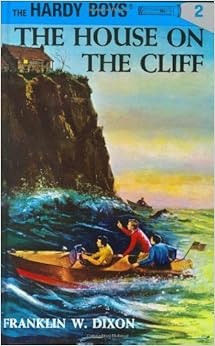
When I was 10 years old, I got my first Hardy Boys books, and they included The House On The Cliff. I remember exactly where the books were in my room: just after my sister was born, I ended up sharing a room with my younger brother, and to make room for his stuff my books went onto the upper shelf in our closet. The hardcover Hardy Boys books were on right, next to the hardcover Doc Savage books.

1978 was the year Roman Polanski fled prosecution for raping a young girl at a Hollywood party. That year President Jimmy Carter -- a man who was frequently ridiculed in our house when I was growing up -- postponed US production of the neutron bomb, a bomb that killed people while preserving infrastructure. 1978 was also the year the US Supreme Court ruled that a judge could not be sued for having allowed a 15-year-old to be involuntarily sterilized by her mother; the judge granted the mother's petition without a hearing and without appointing a lawyer to represent the girl's interests. That year San Francisco passed a landmark gay rights law; St. Paul repealed its.

The Hardy Boys are frozen in time: in the story of some kids helping break up a smuggling ring, farmers serve pie and ham sandwiches to kids who stop in after rescuing a man who was drowning; the boys ride motorcycles and attend high school. Their father, internationally renowned detective Fenton Hardy, never shoots first 'unless he has to.' The smuggler, when he is caught, breaks down and confesses that he had a bad upbringing, and that when he gets out of prison he will use the house on the cliff, which he has inherited, as a boys' home.

In less than 2 years after I first read The House On The Cliff, Ronald Reagan became president. I don't remember much about Jimmy Carter's presidency; I grew up in the Reagan years. I was 11 when he was elected and 19 when his second term ended. Reagan, who many people now believe was suffering from dementia in his second term, was a year younger, when elected, than Donald Trump is now.

Reagan is remembered for lots of things now, but perhaps none more than Reaganomics. Reaganomics didn't lower taxes on the whole: taxes as a percentage of gross domestic product were 18.2% at the end of Reagan's terms; they'd been 18.1% at the start of his presidency. They did lower taxes on the rich, though.

Reagan's policies froze minimum wage at $3.35 per hour, cut public housing and rent subsidies by 50%, and cut spending on Medicaid, food stamps, the Environmental Protection Agency, and Social Security Disability payments.

The Hardy Boys' lives seemed pretty secure: their friends have boats, they have motorcycles, their mom doesn't have to work, they live near the sea. But there's still crime: there are still smugglers who filch drugs and sneak them into New York, and burglars.

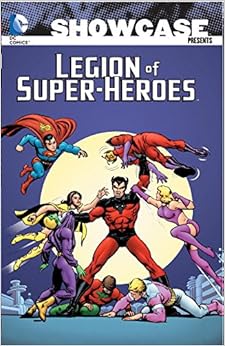
Crime doesn't go away, it seems. In the 30th century, when the Legion Of Super-Heroes takes place, crime has become both an interstellar and a local thing: criminals steal diamonds or try to build armies of robots or take over factory planets in schemes of dubious merit. I started reading comics in the 1980s, much to the dismay of my mom, who found much to be dismayed by wherever she looked. Legion comics were among my favorites: not as dark as Marvel's X-Men but still sort of seeming like they were true-to-life: the Legionnaires (who were 'teens' much like John Travolta and Olivia Newton-John were 'teens' in 1978 when Grease was released as a movie) had parents and lives and took vacations but also saved the world.

Among other terrorist attacks, in the 1980s, Pan Am Flight 103 was blown up over Scotland, and the Marine barracks in Lebanon were blown up. Iran and Iraq were at war, as were the UK and Argentina, Israel and Lebanon, the Soviet Union and Afghanistan, and let's not forget we invaded Grenada that year. We won, largely because us invading Grenada is like Ohio State playing UW-Whitewater.

A year ago, Breitbart gave 20 reasons why Trump should become president. They included his business acumen, that he 'speaks for us little people', has a 'stellar' family and that he 'is a man of sound morals.'

We know none of those things are true, of course, but truth takes a back seat in politics.

In Legion Of Superheroes, the Legion has a rule: no two members can duplicate each other's powers. This is to promote 'diversity,' I think they said. They also reject members whose powers are hard to control or demonstrate significant weakness, like Night Girl, who is superstrong but only in shadow -- so a bright light can take her out! they say.  The rule is honored more in the breach, I think: Ultra Boy and Mon El, for example, each have superstrength and invulnerability, although Ultra Boy can only use one power at a time. If he's superfast, he's not invulnerable, and that gets them into trouble time and again. Timber Wolf and Karate Kid are each martial arts experts, but Timber Wolf, like my own personal favorite, Wildfire, has a temper problem, which frequently gets them into trouble. If you were a rejected legionnaire, you might wonder about how hard-and-fast those rules really are applied.

Just like you might wonder about whether things are really so great in the 30th century. Despite the fact that there is a "United Planets," there is also a planet where people were enslaved for 7 years by a warlike race, and the Legion only happened to foil that plot by luck. The Legion, we're told, is color-blind -- they even have a blue girl! -- but there's an island called Marzal, on Earth, where the black "race" lives and wants no contact with the rest of Earth.

Donald Trump is going to "bring manufacturing jobs back," and stop illegal immigration, plus stop Muslims from coming here.  The current unemployment rate is 4.9%. While it's not commonly discussed, the federal government in fact tries to keep unemployment at about that rate. The Federal Reserve's statutory mandate is to try to keep inflation at an annual level of 2%, and unemployment between 4 and 5%.   Bringing jobs back to the United States will mean lower unemployment, one assumes, because there aren't going to be immigrants taking those jobs. Lower unemployment almost always means higher inflation. Donald Trump's two stated goals directly conflict with longstanding US economic policy.

Whether we have lost jobs, and how many, and when, is open to debate. CNN reported in March that 5,000,000 factory jobs had been lost since 2000.  The story noted that mechanization and automation of jobs was responsible for cutting down on manufacturing jobs, as well as foreign workers. A year earlier, though, CNS News claimed we'd lost 7,231,000 manufacturing jobs since 1979. 

Like job 'creation' job 'loss' takes on many forms. In our office, two lawyers left in the past 18 months to go to other jobs. We didn't replace those lawyers. That seems to count as two job losses, but in one case, the lawyer joined another firm, apparently not replacing anyone there, so that was one job created. Net job loss 1?

Trump is going to repeal Obamacare and replace it with a 'marketplace' alternative. Obamacare in fact is based on a marketplace: you have to buy insurance from insurance companies, who offer it as group rates or on exchanges.

Trump is, as all Republicans are, going to cut taxes. Or not. Trump promised repeatedly during the campaign to cut taxes on small businesses, promises his advisors said weren't actually promises. Either way, Trump's plan looks like it will add trillions to the deficit, forcing more government borrowing and more money to go to US debt service.

In 1988, the total amount the US government spent just paying interest on the national debt was:

$214,145,028,847.73

In 2016, that amount had more than doubled to:

$432,649,652,901.12


The payments have not gone up at a steady rate; sometimes they went down. They peaked at $363,000,000,000 in 1998, then dropped before going up to $451,000,000,000 in 2008, then $454,000,000,000 in 2011. Which means they've gone down nearly 10% since 2011.

I don't remember the 1980s as a particularly good, or bad, time. I remember them as a time that I was mostly preoccupied with the things teens are occupied with: trying to figure out life, trying to date people and fit in, that kind of stuff. I didn't  solve mysteries or fight supervillains; I just read about them as an escape from what I imagined were troubles that nobody could understand and nobody could solve. I didn't pay much attention to politics or government in general until the Iran-Contra hearings, when Ollie North 'heroically' sold arms to Iran to fund the Nicaraguan contras.

The problems the Hardy Boys faced, the villains the Legion faced, the problems my teenage self faced: they were all, really, fictional, transient. They were problems that would go away when you flipped the page, when you turned 16, or 17, or 18. Once high school ends, nobody needs to worry about being popular in high school anymore. As you get near the end of a book, you know that even a weakened Fenton Hardy isn't going to let a smuggler shoot his sons, that Superboy and Star Boy are going to find a way to stop the Fearsome Five.

It's once you close the book, once you graduate, that you realize what problems really are. Over the next four years, people who are scared of the future and fetishize the past are going to try to re-create what they imagined were good times, by selectively choosing what information to pay attention to and what problems to focus on.

But the past wasn't as good as you think it was. The Hardy Boys and the Legion were simplistic notions of the past and the future, versions of reality that are every bit as out-of-touch with the real real world as the minds of those who imagine you can build a wall around America to keep us from getting hurt, who imagine that factory jobs will suddenly exist and there will be people to fill them, who imagine that you can cut taxes and increase spending without hurting someone -- and who will ignore that the someones who get hurt are those who need help the most and take the least.

Consider this:  If you get Social Security Disability Income, which is the primary income Mr F and Mr Bunches will have after they are 18 -- income which they will have to use to support themselves in some way after Sweetie and I are dead -- you get an average of $1,166 per month. Mr F, when he is 18, will not be able to work, not unless a miracle happens and turns his life around. He will have income, assuming that we don't cut it more to bring those factory jobs back, the way Reaganomics did, of about $14,000 per year.

People making six figures save, on average, $5,000 per year on their taxes by taking the mortgage interest deduction. If you earn more than $100,000 per year, and own a home, we reduce your taxes by $5,000 per year simply because you're you.

Cutting taxes to help the rich began in the 1980s. Cutting benefits to hurt the poor began then, too. There have always been wars in the mideast and terrorists looking to kill us. There have always been job losses and changes in society that hurt some and help some. There have always been economic shifts: farms to cities, cities to suburbs, agrarian to industrial, industrial to informational, that have raised some up and hurt others.

Nothing Donald Trump does will change that for the better. But that's not the goal of Trumpists. Their goal isn't to make the world a better place. Their goal is to make the world better for them. Life is a zero sum game for Republicans: if you are up, they are down, and if you are down, they believe they are up, even if they aren't really.

In the 1970s and 1980s, I worried about my comic book collection and whether girls liked me and if the car would be available for dates. I can be excused for ignoring some of the things going on in society, because I was a kid.

In 2016, I worry whether my sons will live on the streets after I die, whether police will shoot my grandson when they pull him over for speeding, whether the few protections that are left in the world to keep people (in America, at least) from starving in the streets or dying in shelters because hospitals won't take them, will be stripped away.

I don't miss the ignorance of the world I had when I was a kid. It's ignorance that got us here. I can hide my head in the sand for a week or two, re-reading old books, but all it does is emphasize that things have been going wrong for a long time now, and we aren't getting any better or smarter.