I first read The Illustrated Man when I was maybe 12, and my Uncle Steve loaned it to me. I had the feeling that the book was taboo, and wasn't sure that my uncle (who was about 20 years older than me) should have loaned it to me.
That concern was doubled by the actual book, which at 12 freaked me out. Those stories were so scary that they stuck in my head for years and years and years: madmen on Venus and puppets locking people in boxes and stuff like that.
I think I re-read the book again maybe in college, but I can't really remember. Now I'm listening to it on audio, and it's been, so far, somewhat of a letdown.
It was written in 1951, and like a lot of scifi written in the 1950s and into the 1960s, it has a completely different tone, if tone is the right word. A lot of the stories I've read from back then -- from Theodore Sturgeon, Bradbury, and even Phillip K. Dick -- are hamhanded, with rather obvious, Twilight-Zonish twists.
So far, I've gotten through the first 4 1/2 stories. Of them, only two stand up so far.The Veldt is okay: a straightforward, somewhat predictable but still creepy story of two little spoiled kids in a rich family who have a room that's basically a holodeck from Star Trek; they program it to be set on Africa, with lions, with rather predictable results. That's not much of a spoiler; you can see the ending coming from about ten million miles away but it's done well.
Kaleidoscope still manages to be excellent, although less creepy to 48-year-old me than 12-year-old me; it's the story of a bunch of guys whose rocket blows up, and they all drift off in separate ways into space, talking over their radios about what it all means to them. It's sad and amazing and even with a hokey ending still a great story.
But The Other Foot, about what happens when the first white man lands on Mars after it was colonized 20 years earlier by blacks, is drivelish "Magical Negro" type of writing, essentially wish-fulfillment for white people who would like to think that black people might forget about all the ill treatment and just shake hands. And The Highway, about a man who lives by a highway and sees a bunch of people fleeing the "atom war" that has ended the world, just feels pointless.
There are still fourteen stories left; tonight I left off halfway through The Man, about astronauts landing on another planet where, apparently, Jesus has just come and gone. It's not very good either but I've got hopes for the next 2/3 of the book that it will live up to what I remembered.
Showing posts with label 10 minutes about. Show all posts
Monday, August 28, 2017
Thursday, January 07, 2016
10 MORE minutes ranking and discussing the books I didn't finish reading in 2015
Last time I counted down from 36-31 the books I read in 2015; those were all books I didn't even bother finishing because they were so bad. All in all in 2015, I tried to read and/or completely read about 40 books, and then ranked them from 1-36.
It's not 1-40 because I listed all the books I could remember reading or find in my Kindle history, then numbered/ranked them. Then I added books that I remembered and renumbered and reranked. Then I thought of more and renumbered again, so on round four I just added the ones in and made them numbers like "26A," as you'll see below.
We're still on book I didn't bother finishing reading, beginning with
30. Stone Mattress: Nine Tales, Margaret Atwood: Margaret Atwood gets a lot of praise, and most of her books just sound unappealing to me. I finally decided to try this one, because I like short stories. I got through the first one, I think. Maybe I got mostly through it. I'm pretty sure it was about an old lady and her husband who is a ghost. Either way it was a plodding and dull story. I didn't care about the old lady. I wasn't interested in finding out why her husband was a ghost, if he was. The book wasn't aggressively trying to put me off, the way David Foster Wallace used to. It was more that reading it felt like a chore, like when I try to read articles about the deficit or Syria, not because I want to but because I feel like I ought to. I doubt I'll be trying any more Atwood stories anytime soon.
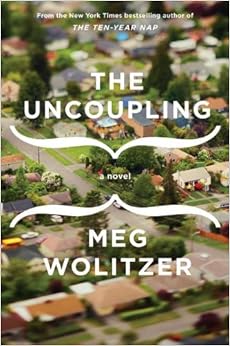
29. The Uncoupling, Meg Wolitzer. I already discussed this bomb, here. I only ranked it this high because the others were so much worse; at least on this one I got about 4/5 through it, although mostly that was because (as I said in that earlier post) it was the only thing I had to listen to on a day of long driving.
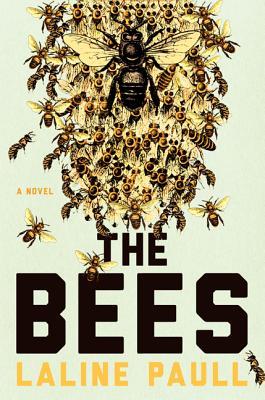
28. The Bees, Laline Paull: This really was disappointing. I remember when this book came out and I thought it sounded great -- a book told from the perspective of a bee, but not a humanized bee like in the cartoons. It was supposedly a major triumph of storytelling or something. The concept itself is okay; the book begins with the main character hatching and has some interesting bits in it, but I just couldn't get into it. There didn't seem to be any energy to the story. I went back to this one two or three times because I really wanted to like it, but it never took, so a chapter or so in I gave up.
27. To Rise Again At A Decent Hour, Joshua Ferris: I bought this book on sale from Amazon, and it was the last book I actually purchased. Every book I've read since then has been borrowed from the library or given to me as a gift. I think this book might have been the reason I became so leery of buying books. It was only $2.99, and that low for a reason. It's not very compelling. And it should be! It's about a dentist who suffers insomnia and who finds out, unrelatedly, that someone has created a whole Web presence for him of a vaguely biblical nature. The guy himself is a sort of determinedly antisocial man who got that way because he was so desperately bad at being social. It has all the elements I should like, but never put them together in any way that mattered to me. I still have it on my Kindle and every now and then think I should go read it some more but then I think eh and go on with my life.
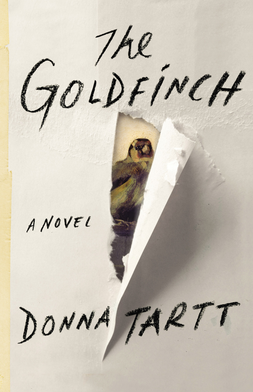
26. The Goldfinch, Donna Tartt: Another one I mentioned here, and I just saw when I checked out that link that I also didn't finish Funny Girl by Nick Hornby so let's make that 26B.
The Goldfinch when I mentioned it in October was one I'd just started, and looking back to that post I can see I was still kind of excited about it. I'm not sure what went wrong. In the book [SPOILER ALERT] the boy who steals the painting goes to a museum with his mom. There's some sort of bombing and the boy barely survives, taking the painting in the process. His mom dies, and his dad isn't really in the picture. Through all that I was liking the book. The boy goes home from the museum, just wanders away with nobody knowing he was in there (but it's done believably) and the book up to that point is really very good. The rest of that day and night are very touching and sad, as the boy relates what happens. Then there is this longish part where he stays with a friend and my interest just waned. I don't know. Maybe it was that I had other stuff going on or something. It just felt like one day I didn't want to go on reading. Possibly the staying-with-a-friend lost steam or something. I just sort of dropped the book and can't really explain why, but when I saw it was available at the library again I thought about trying again, and my mind sort of went Oh no here we go again so I didn't check it out.
26A. The Star Wars, J.W. Rinsler (and George Lucas): This one was actually a comic book version of what I guess was the original draft script for Star Wars. It's really different than the movie turned out to be: Han Solo is an alien, Vader doesn't have a helmet, there are a lot more Jedi, Leia is a bratty teenager. It's got the Empire, and invasions and some good fights, including one on the Wookie planet. I was slowly working my way through it, reading it here and there -- I had it as a physical book I checked out of the library. Right after Xmas, my time expired and I couldn't renew it, because someone else had put a hold on it. So I took it back having read about 2/3 of the way through. It wasn't too bad, but wasn't worth me putting a hold on to finish. Mostly it was kind of an interesting exercise, seeing how much of the very first part of the idea of Star Wars made it into the final movies, and in what form: there were lightsabers, but everyone had them, for example. There was no Millenium Falcon -- at least not at the point where I got through. And I hadn't yet found Chewbacca. C3PO was a female robot, and Artoo Detoo could talk in regular human language; they seemed to both have the personality of the movie's C-3PO. If you like Star Wars it's worth trying to find.
You can see how the books are getting a bit better -- the last one I only didn't finish because of library deadlines. A couple others were maybe worth finishing. The next installment will begin with books I actually did finish.
Friday, January 01, 2016
$25 for a doorstop? No thanks I'm not dumb.
I just read about this book, Barbara The Slut And Other Stories on Gawker and they said it was a great book.
So I clicked over to Amazon, where I saw that the book is being sold, in hardcover, for $24.85 on Amazon.
That’s just the book. Shipping is extra.
$24.85 for a book.
Ever wonder why there are so many articles extolling the virtues of “real” books?
$24.85 for a book that cost $3.50 to get to you.
PS Author’s generally get a higher payout of hardcover and paperback sales than electronic versions of books so the next time you read an essay from Stephen King on how great “real” books are keep in mind that he’s already worth $400,000,000.
Books should cost $9.99.
Tuesday, December 29, 2015
10 Minutes About The Books I ALMOST Read in 2015
I'm going to do a ranking of all the books I read or tried to in 2015, with a bit of discussion of them. The list is incomplete, because my audiobooks have a history that only goes back a month or two -- so I may not remember all those. Although, that probably means they weren't very good. While my memory isn't very great -- and seems to be getting worse almost minute-by-minute -- if a book is really good it probably sticks in my mind.
I'll begin with the first set of
The Ones I Didn't Bother Finishing:
One of the things I realized as I made this list was how awesome most of the books on the list were. The fact that some are near the bottom of the list doesn't mean they were bad, it just means that in comparison to the other books they didn't finish as high. "Someone's gotta be last, right?" -- every gym teacher I ever had, by way of... encouragement? Sure let's go with that.
The reason the books are almost uniformly good is that I mostly get my books from the library on my Kindle, so they're free -- and hence I can start reading almost anything, but because I didn't pay for it, I can stop if it's not interesting to me without feeling I wasted my money. Which means the books I did finish were a higher grade of book overall.
Here are the bottom-ranked ones I stopped reading:
36. The Islanders, Christopher Priest. This guy wrote The Prestige, which I liked, and his books sound amazing. Then, the first one of them I got was this, and I started reading it Thanksgiving weekend. I was a chapter into it when I found out it's written like an almanac or something and that slowly the story is revealed. I was so disappointed I stopped reading, then I thought I should challenge myself but I stopped again, and then I deleted it. I later downloaded The Adjacent by him but couldn't bring myself to start it.
35. Dissident Gardens, Jonathan Lethem: Lethem appears on here three times and he has written a book I am dying (almost literally) to read: As She Climbed Across The Table, which is about a woman in love with a black hole. This wasn't the FIRST book I read by him; it was actually the third and it was the first I gave up on. The story starts off so slowly, with so much blather. It's something about communists or something. Pleh. There's better books by him, two on this list.
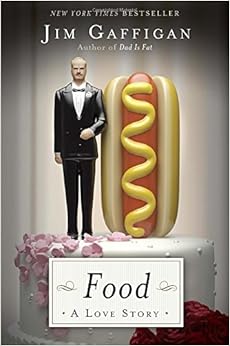
34. Food: A Love Story, Jim Gaffigan. I am a big fan of Gaffigan's, and I can rewatch his comedy specials over and over. But I was disappointed in his first book, Dad Is Fat, not because it wasn't funny but because so much of it was simply his actual jokes, just in book form. I get it: comedians want to make money, but if you're going to write a book, at least warn people not to buy it if they've seen your specials. Then this one started out feeling like the version of his jokes that didn't make the cut for the stage show, and about 10 pages in I gave it up.
33. An Arsonist's Guide to Writers Homes In New England, Brock Clarke: Stephen King said that readers look for voice, that the actual first line or chapter of a story, even the story, isn't as important as the voice, the way the story is told. I don't think that's 100% true, but this book suffered from the voice problem, among others. I picked it up because of the title, but the book goes downhill from there. It's like the author had this great title and then had to pack a story into it. The first chapter or two whip through the guy burning down Emily Dickinson's house, going to prison, getting out, going to college, getting married, having the son of the people who died in the fire show up, and him getting kicked out of his house. I had no idea where the rest of the story would go, but the book felt like a summary of 10 other books. And the main character was just sort of drifting through. You know how in third-person narrator stories, the narrator is kind of there with the characters but not really there? That's how this book felt -- only the story was told in the first person. So it had the feeling of the narrator watching a short film that summarized his life, and explaining it. I gave up on it about where he goes home to find his dad had a stroke.
32. I Was Told There'd Be Cake, Sloane Crosley: This is a book of semiautobiographical essays along the lines of David Sedaris, and while the one or two I listened to were well-enough done, here is the problem with everyone having a blog/writing a semiautobiographical book: so often the stories feel like they exist just to justify the book. I call this "The Chicken Problem," after an episode of Keeping Up With The Kardashians.
"The Chicken Problem" stems from an episode of the Kardashians where they decided that they would raise chickens in the house, for some reason they gave on the show but the real reason being that it was presumably fun to watch rich vapid people chase chickens around their house. Chickens have showed up on lots of other reality shows since then, or their equivalent. Reality shows tend to encourage people to do dumb/interesting stuff because honestly most of our lives are interesting only to ourselves. I have no doubt this blog would get better hits if I bought a chicken and chased it around.
So this book began with a fairly interesting essay about why the author had a bunch of toy ponies (it has to do with a line she says on dates), and then sort of drifted off. I think I listened to the second essay but I gave up pretty quickly thereafter. It was both uninteresting and trying too hard.
31. Is Everyone Hanging Out Without Me, Mindy Kaling: This one, too. I like The Mindy Project, although that series has gone downhill in the last two seasons as Mindy and Danny just lie to each other and fight. If I wanted to see that I'd play my old home movies from growing up. (Frowny face with tear.) So I thought this might be a funny book. It wasn't, really. Much of it was sort of uninspired would-be funny stuff. The story of how she got famous doing a two-person play in which she played Ben Affleck was interesting but I stopped listening after that.
That's it for this time. more to come.
Sunday, November 15, 2015
10 Minutes About "So You Want To Be A Wizard."
I found out about So You Want To Be A Wizard through a recommendation on IO9, which said that "Diane Duane's Young Wizards Is The Fantasy Book Series Everyone Should Be Reading." I don't know if I agree that everyone should read it, but I did and I liked it, and I'm pretty picky, so you probably should, too.
So You Want To Be A Wizard is the first book in the series, and it somehow hits every single step we expect of a book about a girl who gets to be a wizard, while somehow making the story still seem fresh and interesting. That's tough to do, especially since competing with Harry Potter in that department is kind of like writing a swords-and-sorcery adventure using elves and wizards without being accused of mimicking Tolkien -- and while still being original.
I should note that So You Want... actually precedes Harry by nearly two decades, so while I read Rowling's series first, if anyone copied anyone... forget that. J.K. Rowling is superlitigious, as is apparently every single person who ever read her book, according to this Wikipedia article on the number of people who sued her and lost badly.
So You Want To Be A Wizard has a misunderstood and bullied protagonist (Nita) who finds a magical book accidentally (the Wizard manual), learns that she is one of the rare few people who can be a wizard, and sets out on a quest that involves her saving the world... eventually. It has a fire-breathing dragon, it has a friend who is better at spells than Nita is who kind of shows her the ropes, it has trees coming to life and battling, and it features kids who really use about two or three spells to get everything done.
That said, the book doesn't really feel like it's full of tropes, at all, first because the writing is done pretty well: the book moves along at a good pace. I suspect it's aimed as a YA book but like the Potter and Narnia books it resembles (or which resemble it) it doesn't feel like it's meant for a 13-year-old.
In addition, Duane adds nice touches to her magic: the magic is a combination of the heavily-detailed magic that Lev Grossman uses in his Magician series and science. The magic here is largely used through Speech, which is a way of describing the world that helps keep things alive and which also can change things: wizards work in part by simply talking in magical language that convinces things to be other things, so Nita can change a stone wall into a door by convincing it that it's a door. That's a neat concept that I wish I had thought up.
Duane also gives a reason for magic and magicians to exist: They keep the universe from running out. The mythos behind the series has to do with a master of evil, who goes by a lot of names but mostly is referred to as You-Know-Who, because nobody can say his name.
AS AN ASIDE I think we can stop that now: The Villain Whose Name Can't Be Said Because He Will Hear And Destroy You is dumb. I never liked the concept, and it hasn't grown any better with repetition. JUST SAY THE VILLAIN'S NAME.
Anyway, this Master of Evil at the dawn of creation got scared and introduced entropy, and thus death, to the universe, meaning that one day the Universe will end. So wizards have the Speech, which they can use to keep things alive, and the main collection of the Speech is found in The Book Of Night With Moon, which honestly is an awesome name and is another example of how Duane's book rises above average-level Magical Kid fiction. Periodically, wizards have to get The Book of Night With Moon and read from it to keep the universe from ending, and that's [SPOILER ALERT THAT YOU'D PROBABLY HAVE SEEN COMING IF YOU GAVE A MOMENT OR TWO'S THOUGHT ABOUT THIS BEING THE FIRST BOOK IN THE SERIES] what Nita and her young wizard friend Kit have to do: They try to practice their first spell to find a special pen a bully stole from Nita, and in doing so accidentally call into their world a sentient white dwarf star they call "Fred" who teleports the pen to the monstrous version of New York where You Know Who lives, and where it turns out the Book of Night With Moon happens to have been hidden.
The white dwarf star thing is an especially nice touch: Fred is one of the better characters I've come across in any book, and again is one I wish I'd thought of. It's stuff like that, and the monsters in Alternate New York, and the fact that the whole book feels super-well-thought-out, that makes this book worth reading.
So, not maybe for everyone. In terms of 'kids discovering they would save the world' books, it's nowhere near as good as the Narnia books or His Dark Materials, but it's at least equal to Harry Potter or those Prydain books.
Monday, October 26, 2015
10 Minutes About All The Various Books I Have Been Reading (Or Not Reading)
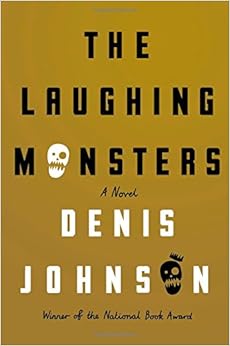
So I haven't done this post in a bit and I thought I could just sum up and talk in general about all the books, starting with the two I just started: The Goldfinch by Donna Tartt, and The Laughing Monsters by Denis Johnson.
I started reading The Goldfinch because of controversy. I heard a lot about it last year when it won the Pulitzer Prize, but that wouldn't have made me want to read it. What made me think about reading it was the discussion over whether it was really a good book at all; this article sums up the discussion, and when I read about why people were arguing about whether it was a good or bad book I decided to give it a try. I'm only about 2 chapters in but so far it's good.
The Laughing Monsters has an even thinner reason for reading it, or thicker, depending. I picked it up solely because I loved Denis Johnson's collection of short stories, Jesus' Son. I've said before that Denis Johnson writes stories as if he were doing a gritty reboot of Damon Runyon's world: the same gangters and crime background but where Runyon's are colorful and fun, Johnson's are desperate and sad and lonely. I have no idea what The Laughing Monsters, a novel Johnson wrote, is about: I'm only two chapters into that, too (on audiobook) but it doesn't matter: already it's gripping. I first put it on when I took Mr F for his ride last night and I thought about extending the ride out to continue listening. It helps that it's set in Africa and involves (apparently) some sort of criminal. I like books set in Africa. (I read Foreign Gods, Inc. a while back and liked that, too, although it's very different from Johnson.)
I got to Laughing Monsters after I rejected, on audiobook, Funny Girl by Nick Hornby. Hornby wrote one of my favorite books ever (A Long Way Down) and some other good ones (How To Be Good, Juliet, Naked) but this book got some bad reviews and about twenty minutes in, I wasn't entertained by the story of a woman who is beautiful but who wants to be a comedienne. I also started but gave up on The Uncoupling, by Meg Wolitzer, a book that had an interesting premise but which fell apart so much that I didn't even bother finishing how it ended.
The Uncoupling is about a town in which all the women decide to stop having sex with men, about the time a drama teacher decides to stage a play of Lysistrata at the local high school. That sounds kind of hamhanded, and it is. The book is the sort in which a character nobody likes because she is unpleasant is actually named Abby Means. It has the feel of a book that wants to have a message, but the message (if there is one) is muddled.
I don't feel that every book must convey a theme or have a higher point or a moral or whatever; I read plenty of books whose main point is tell a story. But The Uncoupling was draped in all sorts of symbolism that felt half-baked and overwrought at the same time. There is a veteran of Afghanistan, a kid just out of high school, who dropped out when his girlfriend got pregnant and who later went to war and had his face ruined, and he sort of on-the-spot befriends the hottest girl in school who on-the-spot decides that her refusal to have sex will be a protest of the war in Afghanistan, which causes another character to take the hot girl's role as Lysistrata, only to have her big night ruined (sort of) by all the men in the audience coming on stage to complain that they love their wives so much, why can't they please have sex?
Seriously.
I made it through about 75% of the book, mostly because I had 7 hours of driving in one day and it was the only book on my phone, but it never developed into a story with a coherent theme, and it never became entertaining, either, so I dropped it.
I finally finished It, too, after the fourth go-round on borrowing the audiobook from the library. IT WAS NOT WORTH IT. The book is great for the first 2/3, and then mediocre for about 1/2 of the final third (got that?) before becoming at times gross (there is a scene where all 7 of the 12-year-olds have sex to escape the monster. NOT EVEN KIDDING. I felt like I should be calling the authorities on King), the final battle with It goes on for FAR TOO LONG, and it jumps back and forth confusingly between 1957 and 1985, for no reason that I could tell; like I said the last time I talked about the book, starting the story in 1985 makes the 1957 flashbacks entirely unexciting, since we know everyone survives. The only surprise was that they survive by having sex. As 12-year-olds. In a sewer full of poop.
(Stephen King mentions poop so much in his books that I thought about starting a TUMBLR of each reference to poop he makes. For a guy who is such a great writer, his flaws are stark and large.)
There were sort of throwaway terrible parts to It, too: like how throughout the book [SPOILER ALERTS] King keeps hinting that there is some 'ritual' that will help the 7 kill the monster, and then at the end, when they do the ritual, "It" doesn't die at all -- it just flees further back where two of the kids have to go punch it to death. So what was the buildup with the ritual? Who knows? There's also some sort of weird cosmology where there is a giant turtle that lives in space -- I am 100% not making this up -- and the kids get flung out into space near it (apparently just mentally but still) and the turtle says it can't help them. Also it talks with a bit of a western drawl. I kept thinking of Gamara.
Apparently it took something like four years for King to write It, and it shows. It's like he had a pretty good story that he then just sort of threw everything else he had lying around into. "Hey, kids battling a monster that appears as their worst fears... yeah, good, but it needs a crazy bully and some homoerotic garbage dump scenes and child abuse and a lengthy chapter in which a pharmacist tells a kid that his asthma is all in his mind, which later on will be undermined by suggesting that not only is it not simply psychosomatic but in fact the inhaler is magic, plus why not a giant cosmic turtle?"
And finally, the book I read in a week was What If? by Randall Munroe, who is the author of the XKCD comic strip. He's a former robotics guy for NASA who quit that job to draw a stick-figure webcomic full time, and then he started writing serious scientific answers to ridiculous questions, like what would happen if the Earth stopped rotating but the atmosphere didn't, or if you threw a baseball at 90% the speed of light, and stuff like that. It's an amazing book, one that might even appeal to people who don't care much for science, but if you do like it, it's one you should pick up now. I had it on my waiting list for a year, and then when we were at the library last week, I saw it on the "new releases" shelf in regular book format, and decided I'd give up my dislike of real books for long enough to read it. I was not disappointed.
That's the roundup.
I started reading The Goldfinch because of controversy. I heard a lot about it last year when it won the Pulitzer Prize, but that wouldn't have made me want to read it. What made me think about reading it was the discussion over whether it was really a good book at all; this article sums up the discussion, and when I read about why people were arguing about whether it was a good or bad book I decided to give it a try. I'm only about 2 chapters in but so far it's good.
The Laughing Monsters has an even thinner reason for reading it, or thicker, depending. I picked it up solely because I loved Denis Johnson's collection of short stories, Jesus' Son. I've said before that Denis Johnson writes stories as if he were doing a gritty reboot of Damon Runyon's world: the same gangters and crime background but where Runyon's are colorful and fun, Johnson's are desperate and sad and lonely. I have no idea what The Laughing Monsters, a novel Johnson wrote, is about: I'm only two chapters into that, too (on audiobook) but it doesn't matter: already it's gripping. I first put it on when I took Mr F for his ride last night and I thought about extending the ride out to continue listening. It helps that it's set in Africa and involves (apparently) some sort of criminal. I like books set in Africa. (I read Foreign Gods, Inc. a while back and liked that, too, although it's very different from Johnson.)
I got to Laughing Monsters after I rejected, on audiobook, Funny Girl by Nick Hornby. Hornby wrote one of my favorite books ever (A Long Way Down) and some other good ones (How To Be Good, Juliet, Naked) but this book got some bad reviews and about twenty minutes in, I wasn't entertained by the story of a woman who is beautiful but who wants to be a comedienne. I also started but gave up on The Uncoupling, by Meg Wolitzer, a book that had an interesting premise but which fell apart so much that I didn't even bother finishing how it ended.The Uncoupling is about a town in which all the women decide to stop having sex with men, about the time a drama teacher decides to stage a play of Lysistrata at the local high school. That sounds kind of hamhanded, and it is. The book is the sort in which a character nobody likes because she is unpleasant is actually named Abby Means. It has the feel of a book that wants to have a message, but the message (if there is one) is muddled.
I don't feel that every book must convey a theme or have a higher point or a moral or whatever; I read plenty of books whose main point is tell a story. But The Uncoupling was draped in all sorts of symbolism that felt half-baked and overwrought at the same time. There is a veteran of Afghanistan, a kid just out of high school, who dropped out when his girlfriend got pregnant and who later went to war and had his face ruined, and he sort of on-the-spot befriends the hottest girl in school who on-the-spot decides that her refusal to have sex will be a protest of the war in Afghanistan, which causes another character to take the hot girl's role as Lysistrata, only to have her big night ruined (sort of) by all the men in the audience coming on stage to complain that they love their wives so much, why can't they please have sex?Seriously.
I made it through about 75% of the book, mostly because I had 7 hours of driving in one day and it was the only book on my phone, but it never developed into a story with a coherent theme, and it never became entertaining, either, so I dropped it.
I finally finished It, too, after the fourth go-round on borrowing the audiobook from the library. IT WAS NOT WORTH IT. The book is great for the first 2/3, and then mediocre for about 1/2 of the final third (got that?) before becoming at times gross (there is a scene where all 7 of the 12-year-olds have sex to escape the monster. NOT EVEN KIDDING. I felt like I should be calling the authorities on King), the final battle with It goes on for FAR TOO LONG, and it jumps back and forth confusingly between 1957 and 1985, for no reason that I could tell; like I said the last time I talked about the book, starting the story in 1985 makes the 1957 flashbacks entirely unexciting, since we know everyone survives. The only surprise was that they survive by having sex. As 12-year-olds. In a sewer full of poop.
(Stephen King mentions poop so much in his books that I thought about starting a TUMBLR of each reference to poop he makes. For a guy who is such a great writer, his flaws are stark and large.)
There were sort of throwaway terrible parts to It, too: like how throughout the book [SPOILER ALERTS] King keeps hinting that there is some 'ritual' that will help the 7 kill the monster, and then at the end, when they do the ritual, "It" doesn't die at all -- it just flees further back where two of the kids have to go punch it to death. So what was the buildup with the ritual? Who knows? There's also some sort of weird cosmology where there is a giant turtle that lives in space -- I am 100% not making this up -- and the kids get flung out into space near it (apparently just mentally but still) and the turtle says it can't help them. Also it talks with a bit of a western drawl. I kept thinking of Gamara.
Apparently it took something like four years for King to write It, and it shows. It's like he had a pretty good story that he then just sort of threw everything else he had lying around into. "Hey, kids battling a monster that appears as their worst fears... yeah, good, but it needs a crazy bully and some homoerotic garbage dump scenes and child abuse and a lengthy chapter in which a pharmacist tells a kid that his asthma is all in his mind, which later on will be undermined by suggesting that not only is it not simply psychosomatic but in fact the inhaler is magic, plus why not a giant cosmic turtle?"
And finally, the book I read in a week was What If? by Randall Munroe, who is the author of the XKCD comic strip. He's a former robotics guy for NASA who quit that job to draw a stick-figure webcomic full time, and then he started writing serious scientific answers to ridiculous questions, like what would happen if the Earth stopped rotating but the atmosphere didn't, or if you threw a baseball at 90% the speed of light, and stuff like that. It's an amazing book, one that might even appeal to people who don't care much for science, but if you do like it, it's one you should pick up now. I had it on my waiting list for a year, and then when we were at the library last week, I saw it on the "new releases" shelf in regular book format, and decided I'd give up my dislike of real books for long enough to read it. I was not disappointed.
That's the roundup.
Monday, September 28, 2015
10 Minutes About Why T.C. Boyle's "Chicxulub" Might Possibly Be The Worst Short Story Ever Written
![]() |
| This is a picture I took that I look at to calm myself whenever I think of this stupid story. |
Which is not to say that I enjoy every story The New Yorker publishes, but I enjoy many of them, and even the ones I don't enjoy I can sort of see why they're so well-regarded, the way I might recognize a song being done well but still not like that kind of music.
That ended this week. The story this week was a piece of dreck by someone named "T.C. Boyle." "T.C. Boyle" is a name I vaguely recognized as being a big name in authordom, although I couldn't tell what I recognized it as. Just a big name, one of those names that obviously has been on covers of books in bookstores facing cover out, rather than spine out.
Having just googled Boyle it turns out he's written a lot of books, not a single one of which I will ever read because T.C. Boyle is a hack on par with a seventh grader who has just discovered metaphors as a thing.
This is T.C. Boyle,
And his writing, judging by the sole story of his I will ever be unlucky enough to have inflicted on me like painful cold sore, is even dopier than he looks there.
The story was picked by some other author who also has had a short story published by The New Yorker, and I don't remember his name and won't look it up because his picking this story marks him as a hack, too.
The author gave a short little intro about why he chose this story. He chose it in part, he said, because Boyle uses a device
IT IS A GIMMICK, spoiler alert
a device in the story, the author said, and what was amazing, this other hack author said, is how the 'device'
GIMMICK
I'm just going to make an aside here and note that it is nearly 72 hours since I listened to this story, and lots of good things have happened since then, and yet just thinking about this story makes me actually get angry. You cannot see the anger with which I am tapping these keys. Everything about this story makes me mad:
1. That it exists.
2. That it was published in The New Yorker
3. That it made me waste 20 minutes of my life listening to it.
4. That I haven't got enough time and energy to spend the rest of my life begging, pleading, people to please not ever read anything by T.C. Boyle again ever for the love of God.
It is a bad story.
All the more so because it, being published by The New Yorker, is theoretically a good story. It is one thing when a erotic fanfiction of a terrible teen novel turns out to be bad. You expect that. But thinking you're going to get some wondrously touching literary gem and then having this pile of wet banana peels dropped in your ears is like having someone tell you pizza is for dinner, only it turns out the pizza has goat cheese and spinach on it and also you're being evicted.
So the hack author who introduced the story went on and on about the device and how it served the story so well etc etc blah blah blah he's a nothing, and then mentioned, too, that when he rehearsed the story before reading it for the podcast, he started crying when he got to the last line.
WELL. You HAVE TO listen to that now, don't you?
Here is the plot of the terrible terrible hacky seventh-grade story Chicxulub. There are of course major spoilers in this, as I am going to try to get you to never read the story because I am your friend and don't want you to make the same mistakes I made.
Chicxulub begins with a 17-year-old girl walking along the road. Here is the opening paragraph:
My daughter is walking along the roadside late at night—too late, really, for a seventeen-year-old to be out alone, even in a town as safe as this—and it is raining, the first rain of the season, the streets slick with a fine immiscible glaze of water and petrochemicals, so that even a driver in full possession of her faculties, a driver who hadn’t consumed two apple Martinis and three glasses of Hitching Post pinot noir before she got behind the wheel of her car, would have trouble keeping the thing out of the gutters and the shrubbery, off the sidewalk and the highway median, for Christ’s sake. . . . But that’s not really what I want to talk about, or not yet, anyway.
Do you feel the sense of foreboding? The threat of what is about to happen? No? Perhaps that paragraph was too subtle? How about what the narrator wants to talk about, then? Here is the very next paragraph:
Have you heard of Tunguska? In Russia?
This was the site of the last known large-body impact on the Earth’s surface, nearly a hundred years ago. Or that’s not strictly accurate—the meteor, which was an estimated sixty yards across, never actually touched down. The force of its entry—the compression and superheating of the air beneath it—caused it to explode some twenty-five thousand feet above the ground, but then the term “explode” hardly does justice to the event.
I know, subtle, right?
At this point, I was already doubting this story, two paragraphs in. It instantly became clear to me what the 'device' was, and now you see why I call it a gimmick. But still: It was in The New Yorker, and the reader said it made him cry, so you know, give it a chance. Maybe Boyle has something up his sleeve (oh he does but it's terrible), maybe it will just be one of those things that's really a typical story but so well written that it's still worth it, a bubble-gum gem of a pop-culture story.
SPOILER ALERT: Nope.
The story goes on exactly the way you can predict from those two paragraphs: In alternating snippets, the 'device' is that we see the 17-year-old's night unfold, as she goes out and goes to a party and walks home in the rain, and the parents have an anniversary that includes them getting a little drunk and smoking some pot because they are stereotypical upper class parents in a stereotypical generic movie-of-the-week storyline.
The alternate snippets are, of course, the author ruminating on the various asteroids that have collided with Earth and how we intersect them all the time and it's just a matter of time until another 'dinosaur killer' comes along.
If you are shaking your head at this right now, and thinking wow that is hamhanded, imagine having sat through 10 minutes of this already, just waiting to see what it was that made this story worth existing in the first place. I had to keep fighting the urge to turn it off and give up. Just a few more minutes I thought, that last line or whatever might make it worth it.
I had, by then, given up on the idea that there might be some merit to the story beyond this mythical last line. The story was so terribly pedestrian, so easily-written-by-a-seventh-grader bad (look I'm not trying to rip on 7th graders. I was one, But it would be a very rare 7th-grade story that belonged in The New Yorker, and this is not one of those) that there was no possibility that it would be redeemed by any but the best possible last lines.
Here is another example of how bad it is. Just as the narrator and his wife are about to go to bed on their anniversary, their poor daughter out there in the rain, asteroids just whipping around in space around us, here is what happens:
Then the phone rings. We stare blankly at each other through the first two rings and then Maureen says, “I’d better get it,” and I say, “No, no, forget it—it’s nothing. It’s nobody.” But she’s already moving. “Forget it!” I shout, and her voice drifts back to me—“What if it’s Maddy?”—then I watch her put her lips to the receiver and whisper, “Hello?”That's right: just as they are about to have sex. Not during dinner, or well after, or woken up during the middle of the night. Could there be any more guilty feeling a parent has than thinking about having sex at the exact moment their daughter gets struck by a car? NO WAY MAN THIS IS BIG HEAVY FEELING STUFF WHOA GUILT.
Also: Why did they stare blankly at each other?They had no idea anything bad was happening. Does their phone never ring? They have a teenage daughter in the house! It rings ALL THE TIME. A more likely version is the phone rang and we both said JEEZ WHO'S CALLING NOW? But not in THE LAND OF A THOUSAND SYMBOLISMS. It's important to not only smack everyone in the face with The Big Picture here, but also to make sure that there are little jabs of guilt: the dad didn't even want the mom to pick up the phone omg his daughter is dead in a ditch and he just wants to get some action what a pig.
I was actually surprised that at no point in the story did the parents actually tell the girl not to call them or something, just to layer on that guilt. Maybe Boyle's saving that for the sequel: Chicxulub 2: Electric Boogaloo.
In case you were wondering whether the description of the daughter getting hit by the car is hilariously overwrought and used to make DAMN SURE you get the metaphor, it is:
“It was a car,” Maureen says. “A car, Ted. A car hit her.” ... A car. Three thousand pounds of steel, chrome, glass, iron.Actually the second-most common component in cars is plastic. Aluminum is used in place of iron. Tires are rubber. Plus most cars are over 4,000 pounds now, on average. This was a very small, very old car.
That small old car (WHICH HINT WAS ACTUALLY SORT OF MADE OF THE THINGS ASTEROIDS ARE EXCEPT FOR CHROME AND GLASS AND STEEL, none of which are found in asteroids) was prefaced a few paragraphs earlier by this:
Astrophysicists call such objects “civilization enders,” and calculate the chances that a disaster of this magnitude will occur during any individual’s lifetime at roughly one in ten thousand, the same odds as dying in an auto accident in the next six months—or, more tellingly, living to be a hundred in the company of your spouse.See? Asteroids are like cars. But that might be still too subtle, so here's this one, too:
The thing that disturbs me about Chicxulub, aside from the fact that it erased the dinosaurs and wrought catastrophic and irreversible change, is the deeper implication that we, and all our works and worries and attachments, are so utterly inconsequential. Death cancels our individuality, we know that, yes, but ontogeny recapitulates phylogeny, and the kind goes on, human life and culture succeed us. That, in the absence of God, is what allows us to accept the death of the individual. But when you throw Chicxulub into the mix—or the next Chicxulub, the Chicxulub that could come howling down to obliterate all and everything even as your eyes skim the lines of this page—where does that leave us?
It leaves people, stuck in this story, praying for their own Chicxulub to free them from further listening to it.
Before I get to the absolute worst parts -- NO THOSE AREN'T THE WORST ALREADY-- consider the merely throwaway terrible parts, like:
-- Annoying use of big words? Check:
the rain coming down in windblown arcs, and I wouldn’t even notice but for the fact that we are suddenly—instantly—wet, our hair knotted and clinging and our clothes stuck like flypaper to the slick tegument of our skin.'He didn't notice the rain in the drive to the hospital, wouldn't even have noticed it at all if it were not stuck to the tegument of his skin.
Do you know what tegument means?
IT MEANS SKIN.
DEEP BREATH CALM DOWN:
-- Hints that the author thought he was delving into the mysteries of the human condition, without ever actually doing so in any sort way whatsoever? DOUBLE CHECK.
It is then that I become aware that we are not alone, that there are others milling around the room—other zombies like us, hurriedly dressed and streaming water till the beige carpet is black with it—and why, I wonder, do I despise this nurse more than any human being I’ve ever encountered, this young woman not much older than my daughter, with her hair pulled back in a bun and a white cap like a party favor perched atop it, who is just doing her job? Why do I want to reach across the counter that separates us and awaken her to a swift, sure knowledge of hate and fear and pain? Why?
Don't worry: Boyle didn't waste even another second exploring either of those topics. Would the author feel a kinship with the others pulled from a cozy life into a harsh tragedy on a rainy night? NO. The author will FORGET THOSE OTHER PEOPLE EXISTED IN A MOMENT. Will the author delve into the untapped rage a parent feels at an inability to protect a child every waking moment, how that emotion might lash out at even innocent people? NO WAY THERE IS HOSPITAL WIRING TO DISCUSS.
Seriously:
The room seems to tick and buzz with the fading energy of the larger edifice, and I can’t help thinking of the congeries of wires strung inside the walls, the cables bringing power to the X-ray lab, the EKG and EEG machines, the life-support systems, and of the myriad pipes and the fluids that they drain.
I would not have been in the least surprised if the doctor came out of the operating room and had a frank discussion about the merits of Windows 10.
THAT would've been better than what Boyle actually wrote:
And then, at quarter past two, the inner door swings open, and there he is, a man too young to be a doctor, an infant with a smooth bland face and hair that rides a wave up off his brow, and he doesn’t have to say a thing, not a word, because I can see what he’s bringing us and my heart seizes with the shock of it. He looks to Maureen, looks to me, then drops his eyes. “I’m sorry,” he says.
At this point I actually said aloud "OH MY FREAKING GOD YOU ARE KIDDING ME." I said it in my car, to myself, like a maniac. This story is torture. "Doctors are younger than me! I am old! The world spins on even in my own grief! This doctor is like a baby himself, and my daughter was MY baby! OH THE HUMANITY."
Let's look closer:
He doesn't have to say a thing, not a word, because I can see what he's bringing us.
JESUS GOD.
That is the single most annoying cliche I can think of: the too-young doctor with the eyes full of bad news. That is a stock footage scene in every melodrama since 1670.
Remember, that is not even the worst yet. NOT EVEN CLOSE. Here is the worst. After ruminating on What It All Means... literally:
So what does it matter? What does anything matter? We are powerless. We are bereft. And the gods—all the gods of all the ages combined—are nothing but a rumor.
the narrator and his wife go into a room full of bodies... literally:
The gurney is the focal point in a room of gurneys, people laid out as if there’d been a war, the beaked noses of the victims poking up out of the maze of sheets like a series of topographic blips on a glaciated plain. These people are alive still, fluids dripping into their veins, machines monitoring their vital signs, nurses hovering over them like ghouls, but they’ll be dead soon, all of them. That much is clear. But the gurney, the one against the back wall with the sheet pulled up over the impossibly small and reduced form—this is all that matters.
You know, they're in that one room at the hospital where everyone is almost dead, the sheets are all pulled up over their faces, and strangers just walk around amongst the carnage without so much as a sheet pulled between them. THAT ROOM.
PS did you get the geographic reference? Those noses on a glaciated plane, that's like... what is it like? What is it? I can't quite put my finger on it... hmmm. It'll come to me. Perhaps a hint, while the narrator looks at his dead daughter:
Can I tell you how hard it is to lift this sheet? Thin percale, and it might as well be made of lead, iron, iridium, might as well be the repository of all the dark matter in the universe.
Remember that scene in one of those Douglas Adams books where the Vogon's intestines strangle him to keep him from reading his poem any longer? I wish that had happened to me. OH AND NOW I GET THE METAPHOR THANKS.
Ready?
Ready?
Ready?
Can you guess what's going to happen? Pull aside the dark matter of (ASTEROIDS AREN'T MADE OF DARK MATTER DUMMY) the sheet (WAIT I THOUGHT THE CAR WAS THE ASTEROID NOW IT'S THE SHEET) to see what those nonexistent gods have wrought:
I can’t speak. I’m rushing still with the euphoria of this new mainline drug I’ve discovered, soaring over the room, the hospital, the whole planet. Maureen says it for me: “This is not our daughter.”
PAGING M. NIGHT SHYMALAN.
It turns out that their daughter had lent her ID to a friend to see an R-Rated movie, which is also totally a thing kids do, and that
Our daughter is not in the hospital. Our daughter is asleep in her room beneath the benevolent gaze of the posters on the wall—Britney and Brad and Justin—her things scattered around her as if laid out for a rummage sale. Our daughter has in fact gone to Hana Sushi at the mall, as planned, and Kimberly has driven her home.UNBEKNOWNST TO THEM. Oh, cruel... um, irony? I don't even know what this is. It's not clear whether Daughter was home all along and not woken by the uproar, or if she arrived home after they left. Either way, WOW I WAS FOOLED.
Of course, this makes every single emotion the author has discussed in the story feel cheap and manipulative. Twist endings rarely serve a good emotional need. They're awesome for thrillers, and fun for horror movies or mysteries, but as a mechanism to explore how our fates seem to be subject to cosmic random forces well beyond our control, this is just lame.
But what about that last line! The one that made the reader cry?What about THAT? Will there be a saving grace for this story? Here is the entire last paragraph, play by play:
I am sitting on the couch with a drink, staring into the ashes of the fire.
Get it? His emotions are burnt out.
Maureen is in the kitchen with a mug of Ovaltine,
From Wikipedia: "Ovaltine is currently not advertised on American television." But you can't spell "quaint and homey" without Ovaltine!
gazing vacantly out the window where the first streaks of light have begun to limn the trunks of the trees.Light like, say, that of an asteroid streaking over Tunguska? Perhaps...
I try to picture the CherwinsThose are the people whose daughter died because the narrator's terrible daughter lent her ID so the girl could go see an R-Rated movie. I am half-tempted to think that's a 'wry' (?) commentary on sin, the way the slutty girl always dies first in horror movies. You can't fit enough social commentary into a story like this. It has to be overflowing. I could've used at least four, five more themes.
—they’ve been to the house a few times, Ed and Lucinda—and I draw a blank until a backlit scene from the past presents itself, a cookout at their place,
"They've been to our house, but I choose to remember the time I was at their house."
the adults gathered around the grill with gin-and-tonics,This barbecue took place in 1953.
the radio playing some forgotten song,I think he owe royalties to Golden Earring. At least Brenda Lee was not comin' on strong.
the children, our daughters, riding their bikes up and down the cobbledSeriously? Cobbled? This barbecue has drifted from a few months ago to 25 years ago to Dickens' London.
drive, making a game of it, spinning, dodging, lifting the front wheels from the ground even as their hair fans out behind them and the sun crashes through the trees.They are like comets and the sun is crashing, YO THIS IS POETRY. Also, IT IS NO LONGER A GAME. So wistful...
Flip a coin ten times and it could turn up heads ten times in a row—or not once.Yes life is very random. Except that your whole point has been that it isn't really, since everything the narrator has said is that another Chicxulub is inevitable, that there is so much danger out there it's not really a question of chance, but time.
The rock is coming, the new Chicxulub, hurtling through the dark and the cold to remake our fate.Unless that coin comes up heads not once? I'm confused.
But not tonight. Not for me.That's not the last line.
This is the last line:
For the Cherwins, it’s already here.
PLEASE FOR THE LOVE OF GOD NEVER READ ANYTHING T.C. BOYLE HAS WRITTEN.
What was EVEN THE POINT OF THIS? It was neither an interesting story nor a new thought. It was a flea-ridden muddle of cliches and twist endings, one that was not told well and did not present any new insight into anything. If genre stories are junk food and literary novels are well-rounded meals and comic books are candy, this story was like the lichen that grows on rocks around the North Sea. I suppose you could eat it, but why?
Why?
I had to write this. I had to get this story out of my system, and only purging it onto you could help. Hopefully I can sleep now. One more time:
Monday, September 14, 2015
10 Minutes About ("The Bone Clocks" And The Difference Between YA And Other Stuff)
There was a moment the other day when I was reading The Bone Clocks, which has been pretty good so far (one of the books I look forward to reading and which I actually make time for) when I began to suspect that maybe I didn't like it.
It was strange: I began to think, despite the fact that I was enjoying the book, that perhaps this was a Young Adult book rather than, you know, a book.
I am not per se against Young Adult books; I don't really care what you or any other person reads. This year I've read a lot of comic books, and I'm currently re-reading the book Spellsinger (by Alan Dean Foster), both of which are things that would give my mom conniptions when I was younger. She did judge quality of reading. I don't. Read what you want. But I don't like Young Adult books. I've read a few of them here and there, and found them uncompelling and unsatisfying. The last book that I think could be classified as Young Adult which I read and enjoyed was the Harry Potter series.
Young Adult to me tends to present as a flatter read, less complex characterizations, not as many deep themes and personal insights, and overall more boring. It doesn't grip me, doesn't engage my mind. One of the things I like about reading is that it almost completely takes a hold of me. A good book will absorb me and get me caught up in it, my mind working feverishly in all corners. That's part of why I read so little these days, actually: I'm so busy and have so many interruptions and am sometimes so worn out at the end of the day, that I can't focus enough to really enjoy a good book, so I go for lighter fair, like Internet reading or TV.
That's part of how I judge a book: how much does it pull my mind into it, how much does it make me think. Not think like I have to decipher this puzzle but simply think like imagine the scene and wonder what happens next and empathize with the characters and so on. That's part of why I can put up with Stephen King's interminable It: despite the fact that it is MILES too long, it's (mostly, about 85%) very engaging and just sucks you into the story.
Young Adult books do not do that for me. I'm left sort of reading it while also noting that I'm reading it, and getting distracted by television, or the way my shirt feels, or whether my pumpkin is still growing in the backyard (it is!). A book like Bridge To Terabithia is a perfectly fine book and I enjoyed it, I suppose, but it's, at its heart, too simple a book to pull me in.
I feel that way sometimes about old TV shows. One night I found an old Three's Company on TV, and remembered how much I loved that show as a kid. Watching it again, I was amazed at how slow and simple the plot was, how obvious the jokes and telegraphed the storyline was. The same thing with Newhart, which I also enjoyed. These were the Young Adult shows of television, without the wordplay and visual jokes and overlapping storylines of television I've enjoyed as an adult. Consider the Jerk Store episode of Seinfeld, one of my all-time favorite episodes: It has four storylines, each of which overlaps the other and calls back to earlier episodes and interact with each other, and the jokes range from simple jokes like Kramer getting hit with tennis balls to more complicated, adult-level jokes:
GEORGE: So concerned was he, that word of his poor tennis skills might leak out, he chose to offer you his wife as some sort of medieval sexual payola?
JERRY: (explanation) He's new around here.
GEORGE: (hopeful) So, details?
JERRY: (walking away) Well, I didn't sleep with her.
GEORGE: Because of society, right?
JERRY: (weary) Yes, George, because of society.Young Adult simply doesn't have that complexity, and because of that, I've sometimes decided not to read certain books, at all. Eleanor & Park, by somebody, was a book that sounded good, so I requested it from the library. When it came in, the blurb on the back said it was "YA". I dropped it in the return slot, unread. I didn't even want to try.
Which seems odd, again, because I am reading Spellsinger, which is about a guy who is transported to another world by a turtle-wizard, and he sings Beach Boys songs to do magic and fight off giant bugs. His best friend is an otter. This would seem to be on the same intellectual level as most Young Adult, but somehow it's not -- even though I read this book at 17 or so and enjoyed it.
It's hard to parse out, but the general idea for me is the aim of the book. To me, Young Adult books aim at presenting a teenage world, and teenagers (on the whole) are less complicated and interesting than adults. Their needs and thoughts tend to be self-centered, immature: everything is superimportant, even if it's not. Most of the action is centered on how it affects the main character, which is often a stand-in for the (presumed) reader. I know not all of it is like this, but most Young Adult books have at least some facets of those.
Adult books expand out the scope. Even when they are written in first person, they tend to be books about how a person interacts with the world, and not every interaction, thought, or feeling feels like it rebounds back to how does this affect me personally? This has the effect of making the story feel more universal, and a little deeper. The actions people take are seen as affecting others directly, with less navel-gazing.
A good example of a book that is not a Young Adult book but feels like one is the His Dark Materials trilogy. In contrast to Harry Potter, these books really feel grown-up. Both feature precocious kids thrown into a magical world they didn't really know existed, but whereas Harry Potter dwelt a lot on Harry's own internal struggles to grow up and adapt to the world -- how does this affect me? -- Lyra's adventures involved her leaving her comfortable life to rescue her friend, Roger, and then undertaking even more travels because it was necessary for her to do so. While Lyra occasionally feels sorry for herself, etc., the difference is marked in how each does things, and why. Harry Potter faces Voldemort (the T is silent!) more because he feels destined to: Almost everything Harry does is because he is forced into it, rather than because he wants to. His powers remain undeveloped and in the end he 'wins' (Um, spoiler alert?) because of something his parents did. That's a juvenile perspective: getting yanked around by fate, unwillingly, relying on others to help you through.
Lyra, meanwhile, goes against the advice of her daemon, then opts to reject some adult advice while opting to follow others; she has to pick and choose who to trust and makes those decisions sometimes without consultation. She, too, is a "chosen one" on whom everyone's fate rests, but she is consciously guiding her own role in this play. That's what adults do.
The Bone Clocks, which is where I started this, was starting to feel like Harry Potter: the main character, Holly, starts out the book by finding out (mild spoiler alert) her boyfriend is cheating on her. She runs away, and falls in briefly with a strange kid from her school. By the time I'd gotten that far, as enjoyable as the book was, it was feeling Young Adult-ish. So I stopped and googled Is The Bone Clocks YA? and learned to my relief that it wasn't. So I've kept reading it, and hoping that this first part (which is, as I've said, pretty good) is going to grow beyond the limited, self-centered perspective. There's hints that will happen, so I'll stick with it a bit.
Monday, August 24, 2015
10 (More) Minutes about "California" and its apocalyptic marriage.
I'm about 1/2way through California and there are two things that I find both fascinating and compelling about the book. First is how nothing seems to happen and yet the story keeps just pulsating forward with energy, and the second is how the book seems to really be about Cal and Frida's relationship.
The latter first: As I might have mentioned the last time I talked about this book, it's an apocalypse-happening book. Civilization hasn't completely broken down: there are walled-off communities and there is still electricity and consumer goods and gasoline, but people can't afford anything and something like 2/3 of the people in the US' Midwest and South have died in blizzards. (There is also no mention, ever, of other countries.) While the end of society seems pretty far advanced, it's not dead yet.
All of this is told matter-of-factly and as part of the story: Cal's mom died in the blizzards, and Cal and Frida sold their heirloom wedding rings to get enough money to buy gas to leave LA, and as we get these details little bits and pieces slip in about the world at large, so while it's exposition, it's done in a stylish way that doesn't detract from the book.
The more I read, though, the more I keep thinking there are parallels between society and Cal and Frida's marriage: just as we don't really know what happened to the US (it seems to be a mix of scarce fuel and global warming, maybe, destroying the economy as well as people, but that's just a guess), we don't really know much about Cal and Frida's marriage or relationship. Their story jumps back and forth from how they met (at Cal's school where Frida's brother Micah, a terrorist who blew himself up in a bombing at a mall, just after saying, cryptically, "Listen") to their life now to their life in LA to their childhoods, and each new piece of information subtly changes the way we look at both Cal and Frida. It's really, really well done. I once wrote a book in which I deliberately jumped the story back and forth to give the reader a feel for how we actually get to know people: when you meet someone, you don't just get their whole life story chronologically. You get some information up front and then get to know them in everyday life while getting little bits of history here and there. I think I did pretty well at that task, but Eden Lepucki is so much better at it that it leaves me kind of in awe. She makes characters sympathetic and then unlikeable and then mysterious and then back again, all in a few chapters.
As she does that, too, there's more and more a sense of uneasiness about their marriage. At the start of the book the marriage seems like a rock, just a solid piece of emotion that holds fast in a weird upturned world, but now, halfway through, the marriage feels like it's ready to break apart, almost, if it was ever together. I don't know if I'm reading too much into it, but the parallel feeling between the marriage and what happened to society is really amazing, and unsettling: this couple, who a reader will start out liking and rooting for, suddenly is not such a great couple at all and may not have much future. Or they do.
That feeling, the uneasiness, is the hallmark of the book. It almost feels like there is something big around the corner, at all times. Not like in a horror movie, say, where a character is about to look in a mirror or open a door and you can feel that the monster is going to appear. There's just a feeling of dread, mixed with excitement. I mentioned before, I know, that post-apocalyptic books represent a kind of freedom, a release from society's strictures. There's an element of that here, and that's where the excitement comes from. Cal and Frida are free to form a brand new kind of life without any interference.
But dread, too, because it's clear they're just on the edge of survival: we keep getting information about how little food they have, and how cold it gets. I won't provide any spoilers, but Lepucki also keeps shifting the information around, revealing bits and pieces of the story so that your expectations are constantly mixed around.
I said that nothing much happens, which is not quite true. There are big events that take place, but they seem muted, distant, less immediate than Cal and Frida's own struggles for survival and struggles with themselves and each other. The first really big thing just happened to the couple, and while it's inarguably a big deal in the book (again, no spoilers here), it somehow feels anticlimactic, like this big thing is only a prelude to the next big thing.
The book has an edgy feel to the comfort, like the feeling you'd get if you invited someone you didn't like much to your Xmas party. It's ... enthralling. That's the word I'd use. I read it last night until I couldn't even keep my eyes open and then I put the book aside and just laid in my bed thinking about it until I fell asleep.
Monday, August 10, 2015
10 MInutes About "California" By Eden Lepucki
10 minutes that will start with mentioning again that I'm really putting off reading To Rise Again At A Decent Hour, which was a book I really thought sounded good, and which I like when I read it, but I find it not very compelling so I haven't really wanted to read it. Is that weird? It probably is. But it's probably also why the book was discounted to $2.99, which was the whole reason I bought it in the first place, which says a lot about books and discounting and readers and probably society.
So instead of reading To Rise Again this weekend, I was going to continue with Kurt Vonnegut, whose Welcome To The Monkey House contains very little science fiction, even for Kurt Vonnegut, whose science fiction has always been more fiction than science. Most of the short stories are almost Cheever-esque, perhaps with a few more twists than Cheever put in. In fact, Cheever's The Swimmer is Vonnegut-esque, so the two maybe have more in common than I would have thought at the start of that sentence.
In fact, Cheever had a story called The Enormous Radio, in which a woman's husband bought her an (enormous) radio that actually played conversations from other apartments in the building. The wife becomes more and more obsessed with this, while the husband spends too much money trying to fix the problem, and that worries him. This slowly tears at the husband and wife, who were happy before (or seemed to be; it's not clear whether the radio makes them unhappy or merely exposes their unhappiness.
Vonnegut's collection includes a story called Next Door in which a boy, left home alone for the first time, hears a loud radio from next door, and then a couple fighting over the sound of the radio. He gets more and more scared that the couple will hurt each other, so he calls the radio station and requests a song from the husband of the couple to the wife of the couple. This has disastrous and mildly surprising results.
So there's a more direct crossover between them, although saying that writers in the 40s-60s were connected because radios featured in their stories would be like saying writers today were connected because their characters used laptops, I suppose.
There is a husband and wife (how's that for a segue!) in California, too. Two husbands and two wives, so far, and lots and lots of dread. I began California because even Vonnegut's non-scifi stuff tends to be rather depressing, and I wanted something a bit different. California was not really the thing to choose, then: it's also depressing, already, but in a slightly different way.
At the start of the book, Frida and her husband Cal have abandoned Los Angeles, which (along with all of society) appears to have fallen apart nearly completely, and are living in a shed in the woods, where they've been for three years. They are trapping food (a bit) and growing food, and Frida has just discovered she's pregnant, which makes her remember when they met their neighbors a few years before -- 'neighbors' being a loose word for the distant acquaintances whose family of four also lives in the woods (and built the shed Frida and Cal are living in, and also who spied on Frida and Cal at awkward times -- and told Frida about it).
There's so much that's weirdly sad in the book, already. It's like a kaleidoscope, or maybe like looking at a brilliant, detailed miniature world that has fallen on the floor and shattered into barely-identifiable pieces. Frida has a turkey baster, made of glass, wrapped up and hidden with her 'artifacts,' one she bought just before the two abandoned Los Angeles, and which she keeps hidden from Cal. There's a traveling junk trader who gets tense when people ask him too many questions period. There's the vague, unsettling talk of just how far society has gone down hill -- stores that only took gold, medicines being only for the rich, malls overtaken by trees (or possibly). And it's all recent: Frida and Cal have been in the woods three years (having driven there and then driven their car as far away as the empty gas tank would let them, to lead people away from where they are living/hiding.)
I mentioned that I liked Footfall because it wasn't post-apocalyptic, but apocalyptic. I like stories that take place during the fall of civilization. A writer on IO9 recently suggested that we like postapocalyptic stories in part because of the possibility of relief they present: in a post-apocalyptic world, we might have to fight mutants or wander a desert or maybe get kidnapped by Charlize Theron or whatever, but we wouldn't have to watch our inbox fill up with emails and pay credit card bills and register for school and the like. The idea is that there would be almost a sense of freedom to a postapocalyptic world.
I'm not idiot enough to think I'd do well in something like that; as I've often said, my own skillset would qualify me for 'monster bait' after the end of the world. (In another Larry Niven book, a Senator helps set up a new society after the end of the world from a comet; he's picked because he knows the law and everyone respects him. So maybe there's hope for me.) And post-apocalypses make me sad because I think of how hard life would be. I have kids; I can't imagine raising kids in a wasteland glowing with nuclear fallout.
That's one of the things that is weird and depressing and scary already in California: Frida is pregnant, and their neighbors (?) have two kids. When they first meet, the neighbor lady asks Frida whether she is going to get pregnant, and when Frida hesitates -- after all, the world is falling apart-- the neighbor says "You didn't come out here to die, did you?" I sympathized with Frida: you wouldn't want to feel like you are giving up, but would you bring a kid into a dead world? Or a dying one? I know that the world Frida and Cal are living in seems kind of like pioneer times, but I don't romanticize pioneer times any more than I do postapocalyptic worlds. I'd have hated the 1880s, too. I'd have disliked anything before about 1957, I suspect.
What's more interesting to me is the why of liking apocalyptic stories. Following that IO9 writer's idea, I spent some time wondering about why I might find these stories enjoyable, if a bit depressing. Probably it's because I've got so much going on, especially over the last year or so. If life is hectic, or hard, or challenging, it can be escapist to see how people deal with even harder troubles. It's a lot worse, I suppose, to have elephants invade the Earth or have to flee the cities after some (as yet unknown) disaster than it is to try to fit into a new firm or have a jury trial or worry about whether I'm doing everything I can for Mr F or Mr Bunches. So reading books like this may be a way of putting my own life into perspective.
Sunday, August 02, 2015
10 Minutes About "Welcome To The Monkey House" by Kurt Vonnegut
I have the book To Rise Again At A Decent Hour on my Kindle, and having finished Footfall Saturday afternoon (SPOILER ALERT HUMANITY WON), I was looking for something to read today. To Rise Again was sitting right there but while I am somewhat enjoying the book, it's not compelling.
So I went online to my library to see what was out there to read, and the first thing I found was California, by Eden Lepucki. People may recognize her as the author who essentially won the writing lottery when Stephen Colbert, as part of Hachette's fight with Amazon, plucked her from obscurity and plugged her book on his show as well as having her on to talk about it.
Sweetie and I talk all the time about how luck plays a huge role in success, probably as much of a role as hard work. I try not to be bitter about how some people get lucky and I do not, but sometimes it's hard not to be resentful. I won't read The Martian, for example. It just makes me too mad: I wrote a story about an astronaut alone in space, too, I think, and wonder why The Martian gets made into a movie with Matt Damon while my book sells a copy every three months.
So I wasn't really thinking much about California but there it was, available, and I've wanted to read it: I was in the mood for more end-of-the-world books. There are post-apocalyptic books a-plenty, but not many apocalyptic books, and Footfall was one of those and so I was in the mood for more read-about-it-while-the-world-is-ending-type stuff. California isn't quite that, either. So after I borrowed it, I kept on looking. I borrowed a new book by Robert Asprin, too, The Adventures of Duncan & Mallory. He's the guy that wrote the M.Y.T.H. Inc. series that I loved when I was much younger so I thought I'd give him a shot.
But I still wasn't sold, so I kept on looking and I came across Kurt Vonnegut. Here is how: I started writing a story the other day and on the spur of the moment I decided that the story would be narrated by a ghost. (It's a post-apocalyptic story, as it turns out.) So I wrote the first few pages but today I kept thinking that I'd read a story narrated by a ghost before, and I was pretty sure it was a Vonnegut story. So I googled story narrated by a ghost Vonnegut and found it: Galapagos, Vonnegut's take on Darwinism and evolution, in which the story is told by the ghost of the son of his fictional alter ego (?) Kilgore Trout, and the bad guy is the human brain.
I decided, anyway, to leave my story narrated by a ghost. Vonnegut didn't patent that.
Galapagos isn't really a book I wanted to read, so I downloaded Welcome to the Monkey House, instead, a collection of the short stories Vonnegut wrote to get the money to pay for writing the novels he wanted to write. I sometimes think it must have been far easier to be a writer back in the 30s or 40s or 50s, before everything got all splintered by cable and the Internet and Amazon. But probably it was just as hard in a different way.
Anyway, Vonnegut wrote the introduction to these short stories, and in the preface he said some interesting things. Things like:
I liked that, because it reminded me of back when I used to swim for exercise and I loved it because it felt like I was flying.
I began reading it right away. I was in a Vonnegut kind of mood, I guess, but unlike the sad scifi stories I read a while back from Saunders, these were not all sad and didn't depress me. The stories I have made it through so far are:
Where I Live, which isn't Vonnegut-esque at all; it's kind of the story of a guy who stops by a New England town to sell some encyclopedias, but nothing much happens. Despite that, the story is interesting and seems to have a momentum all its own, without going anywhere. I liked it, and it's a good intro to the book.
Harrison Bergeron, which is more like what I expected: it's a terrible (in a good way) story of a future where everyone is noncompetitive, by force: the main character in the story is the father of the title character, and he is a smart man. So to keep him from being smarter than other people, he must wear an earpiece that blasts a random loud noise into his head every 20 seconds. He also wears a bag with 47 kg of pellets in it around his neck. Ballerinas wear bags over their faces if they are pretty, and weights to even them out. In the story, Harrison Bergeron is taken captive because he is so extremely better than the others around him, and he escapes and gets onto the TV show his parents are watching, declaring himself to be the Emperor of humanity. It ends badly. The story is astonishing in the way that Vonnegut sometimes is. It's like a gut punch: so much awfulness instantly and it just seems to keep on radiating out. I loved it and will probably remember it forever.
I was once asked why I write so many sad stories. I hadn't thought I wrote that many of them, but I guess I do. I think I write sad stories because it's a way to get out some of the stresses and sadnesses that are hard to express otherwise. I worry about my boys, and am trying to (re)build a business, and have health concerns, and I want to help the older kids, and if you went around just all the time talking about how worrying those are, if you let the sadness overwhelm you at night as you lay there and try to read, you might never sit up again. So I let it out in little doses in stories, and that helps me keep the happiness in charge. I'm actually pretty happy most of the time. I think it's because the stories I write let me let some of that steam out, relieve the pressure.
If that's true of me, it makes me wonder what was in Kurt Vonnegut that he would be able to write such terrible stories like this. Here's another quote from his preface:
Let's finish this on an upbeat note. The other story I read today in the collection was Who Am I This Time? The narrator is a man drafted to direct the local play. He decides to do A Streetcar Named Desire, and casts the best actor in town, a clerk at the hardware store who is a phenomenal actor but otherwise almost completely nondescript, fading into near nothingness when he is not acting, never mingling with people. They also cast a beautiful woman who is in town for just 8 weeks, and who cannot act at all -- except when around the clerk. Of course the woman falls in love with the clerk, but the clerk cannot relate to anyone when he is not acting.
So on the last night of the play, the woman gives the clerk a present: a copy of Romeo & Juliet. She asks the clerk to read a part to her. They act out a scene, fall in love, and get married, continuously acting out various romantic plays.
It's both happy and sad, but sad in the good way: it's people who have found a way to prosper in a life that would otherwise be dysfunctional. Isn't that what we all do? We all have to find a way to fit ourselves into our lives, lives we have sometimes chosen and sometimes stumbled into by luck. We have to find a way to make what we are fit what we have to be, sometimes.
Who Am I This Time? we might as well be asking ourselves every day -- and the story gives the lesson that rather than taking the role we were thrust into, we could opt to pick a new one for ourselves, and, having leapt into those shoes, walk seven leagues in them.
So I went online to my library to see what was out there to read, and the first thing I found was California, by Eden Lepucki. People may recognize her as the author who essentially won the writing lottery when Stephen Colbert, as part of Hachette's fight with Amazon, plucked her from obscurity and plugged her book on his show as well as having her on to talk about it.
Sweetie and I talk all the time about how luck plays a huge role in success, probably as much of a role as hard work. I try not to be bitter about how some people get lucky and I do not, but sometimes it's hard not to be resentful. I won't read The Martian, for example. It just makes me too mad: I wrote a story about an astronaut alone in space, too, I think, and wonder why The Martian gets made into a movie with Matt Damon while my book sells a copy every three months.
So I wasn't really thinking much about California but there it was, available, and I've wanted to read it: I was in the mood for more end-of-the-world books. There are post-apocalyptic books a-plenty, but not many apocalyptic books, and Footfall was one of those and so I was in the mood for more read-about-it-while-the-world-is-ending-type stuff. California isn't quite that, either. So after I borrowed it, I kept on looking. I borrowed a new book by Robert Asprin, too, The Adventures of Duncan & Mallory. He's the guy that wrote the M.Y.T.H. Inc. series that I loved when I was much younger so I thought I'd give him a shot.
But I still wasn't sold, so I kept on looking and I came across Kurt Vonnegut. Here is how: I started writing a story the other day and on the spur of the moment I decided that the story would be narrated by a ghost. (It's a post-apocalyptic story, as it turns out.) So I wrote the first few pages but today I kept thinking that I'd read a story narrated by a ghost before, and I was pretty sure it was a Vonnegut story. So I googled story narrated by a ghost Vonnegut and found it: Galapagos, Vonnegut's take on Darwinism and evolution, in which the story is told by the ghost of the son of his fictional alter ego (?) Kilgore Trout, and the bad guy is the human brain.
I decided, anyway, to leave my story narrated by a ghost. Vonnegut didn't patent that.
Galapagos isn't really a book I wanted to read, so I downloaded Welcome to the Monkey House, instead, a collection of the short stories Vonnegut wrote to get the money to pay for writing the novels he wanted to write. I sometimes think it must have been far easier to be a writer back in the 30s or 40s or 50s, before everything got all splintered by cable and the Internet and Amazon. But probably it was just as hard in a different way.
Anyway, Vonnegut wrote the introduction to these short stories, and in the preface he said some interesting things. Things like:
I have been a writer since 1949. I am self-taught. I have no theories about writing that might help others. When I write I simply become what I seemingly must become. I am six feet two and weigh nearly two hundred pounds and am badly coordinated, except when I swim. All that borrowed meat does the writing. In the water I am beautiful.
I liked that, because it reminded me of back when I used to swim for exercise and I loved it because it felt like I was flying.
I began reading it right away. I was in a Vonnegut kind of mood, I guess, but unlike the sad scifi stories I read a while back from Saunders, these were not all sad and didn't depress me. The stories I have made it through so far are:
Where I Live, which isn't Vonnegut-esque at all; it's kind of the story of a guy who stops by a New England town to sell some encyclopedias, but nothing much happens. Despite that, the story is interesting and seems to have a momentum all its own, without going anywhere. I liked it, and it's a good intro to the book.
Harrison Bergeron, which is more like what I expected: it's a terrible (in a good way) story of a future where everyone is noncompetitive, by force: the main character in the story is the father of the title character, and he is a smart man. So to keep him from being smarter than other people, he must wear an earpiece that blasts a random loud noise into his head every 20 seconds. He also wears a bag with 47 kg of pellets in it around his neck. Ballerinas wear bags over their faces if they are pretty, and weights to even them out. In the story, Harrison Bergeron is taken captive because he is so extremely better than the others around him, and he escapes and gets onto the TV show his parents are watching, declaring himself to be the Emperor of humanity. It ends badly. The story is astonishing in the way that Vonnegut sometimes is. It's like a gut punch: so much awfulness instantly and it just seems to keep on radiating out. I loved it and will probably remember it forever.
I was once asked why I write so many sad stories. I hadn't thought I wrote that many of them, but I guess I do. I think I write sad stories because it's a way to get out some of the stresses and sadnesses that are hard to express otherwise. I worry about my boys, and am trying to (re)build a business, and have health concerns, and I want to help the older kids, and if you went around just all the time talking about how worrying those are, if you let the sadness overwhelm you at night as you lay there and try to read, you might never sit up again. So I let it out in little doses in stories, and that helps me keep the happiness in charge. I'm actually pretty happy most of the time. I think it's because the stories I write let me let some of that steam out, relieve the pressure.
If that's true of me, it makes me wonder what was in Kurt Vonnegut that he would be able to write such terrible stories like this. Here's another quote from his preface:
My only brother, eight years older than I, is a successful scientist. His special field is physics as it relates to clouds. His name is Bernard, and he is funnier than I am. I remember a letter he wrote after his first child, Peter, was born and brought home. “Here I am,” that letter began, “cleaning shit off of practically everything.” My only sister, five years older than I, died when she was forty. She was over six feet tall, too, by an angstrom unit or so. She was heavenly to look at, and graceful, both in and out of water. She was a sculptress. She was christened “Alice,” but she used to deny that she was really an Alice. I agreed. Everybody agreed. Sometime in a dream maybe I will find out what her real name was. Her dying words were, “No pain.” Those are good dying words. It was cancer that killed her. And I realize now that the two main themes of my novels were stated by my siblings: “Here I am cleaning shit off of practically everything” and “No pain.”
Let's finish this on an upbeat note. The other story I read today in the collection was Who Am I This Time? The narrator is a man drafted to direct the local play. He decides to do A Streetcar Named Desire, and casts the best actor in town, a clerk at the hardware store who is a phenomenal actor but otherwise almost completely nondescript, fading into near nothingness when he is not acting, never mingling with people. They also cast a beautiful woman who is in town for just 8 weeks, and who cannot act at all -- except when around the clerk. Of course the woman falls in love with the clerk, but the clerk cannot relate to anyone when he is not acting.
So on the last night of the play, the woman gives the clerk a present: a copy of Romeo & Juliet. She asks the clerk to read a part to her. They act out a scene, fall in love, and get married, continuously acting out various romantic plays.
It's both happy and sad, but sad in the good way: it's people who have found a way to prosper in a life that would otherwise be dysfunctional. Isn't that what we all do? We all have to find a way to fit ourselves into our lives, lives we have sometimes chosen and sometimes stumbled into by luck. We have to find a way to make what we are fit what we have to be, sometimes.
Who Am I This Time? we might as well be asking ourselves every day -- and the story gives the lesson that rather than taking the role we were thrust into, we could opt to pick a new one for ourselves, and, having leapt into those shoes, walk seven leagues in them.
Subscribe to:
Posts (Atom)