Showing posts with label star wars references. Show all posts

Monday, September 25, 2017

I think a cool thing to do would be to spend an entire day using ONLY Star Wars quotes.

Boom goes the dynamite
"... Only you can see then, Martin. You want to know why?"

"This is bullshit," Martin said.

"You've got the sight," Harrison said. "The third eye. The sixth sense."

"I don't see dead people," Martin said.

"No, you see worse. I've met people like you before. You have a talent. You don't need a gadget to make it work."

"Is there where you tell me to put away the targeting computer?"

-- We Are All Completely Fine, Daryl Gregory.

Friday, February 17, 2017

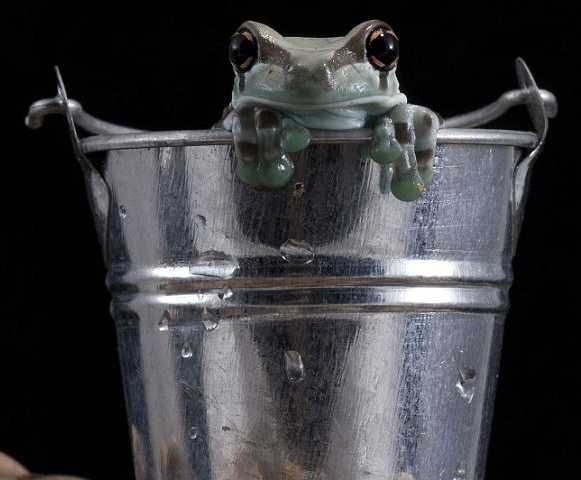
So they had frogs and buckets in that galaxy but not barrels and fish? (Quotent Quotables)

This picture is from an actual article entitled "Frogs Can Help Make Milk
Stay Fresh Longer."  Here is the text of that article:
There used to be an old Russian wive's tale that if a
 frog jumped in your bucket of milk, it wouldn't go sour.
 As it turns out, that might be true because
 the peptides in frog's skin secretions are antibiotic.
 It also means that as more diseases become
 antibiotic resistant,
we might start turning to frog ooze to prevent infections.
Often in scifi and fantasy you'll see the author reminding you Hey this isn't your world it's a different one look how different they are tho like in this passage from Chuck Wendig's Star Wars: Aftermath: Life Debt: Superfluous Titles in which an alien bounty hunter is reflecting on how their attempt to free Kashyyyk*

The Empire— if those ships above even claim to be that, anymore— is now attempting to bomb this planet to oblivion. Already she knows how this will go: Many of the newly freed Wookiees are only peripherally free. Most are still trapped in settlements. Which means killing them will be as easy as firing a blaster into a bucket of frogs.


"Hmmm. Hmmm. Need a simile for something that's really easy to do. Something where the thing you're going after is just trapped there. Can't get out. Not fish in a barrel that's too quotidian. This is an alien planet. A long time ago. A galaxy far far away. Need to make sure they remember that. We're not down at the docks in San Diego here after all.  Nobody is shooting fish in a barrel. Who shoots fish anyway? Why is that the expression? And did they ever keep fish in a barrel?** I bet they didn't. No time to look it up now. Got to get this thing done. How about something more Star Warsy. Like blasters? Blasters are Star Wars. Like firing a blaster into... what would you fire a blaster into in Star Wars? ... ... ... like firing a blaster into a cantina full of Hutts... no, no... like firing a blaster into a energy globe of Gungans... no, wait, the memo said absolutely nothing that would remind someone of the prequels..."

"Hey, Dad, want to see my bucket of frogs?"

*BINGO*

____________________

*I had to look it up to remember that it was spelled with three ys. You wouldn't want to make the Wookies angry by misspelling their home planet. When Wookies get angry...

**Nobody is apparently sure where the expression 'shooting fish in a barrel' comes from***, but what you should know is that it's not the bullet that gets them, it's the acoustics: when you fire a bullet into the water of a barrel the shock wave of sound kills the fish. 

***If you go look up fish in a barrel on Wiktionary you'll see that another phrase for something that's easy is "duck soup."  Most people who write about this stuff say that "duck soup" has no clear origin as an expression for something that's really easy to do. But one commenter that I found traced the expression to a belief that Inuit make 'duck soup' by putting an entire duck into boiling water, feathers and all, and hence duck soup is easy to make.


Saturday, February 04, 2017

Book 7: Star Wars Amalgamated Products, Ltd.

Before you go thinking this is another boring discourse about how Star Wars is just another brand like Coke or McDonald's, like the one I did almost just exactly a year ago, I will say I actually enjoyed this book a lot; it's better than Aftermath book 1, and that owes probably equally to the fact that the characters in this book are now more established, and also some of the beloved characters from Star Wars are also back: Leia and Han are here, as is Chewie (albeit in a mostly nonexistent role), but also to the fact that this book far more than Aftermath seems to fit into the story that the movies are telling, as in Aftermath the rise of the First Order and the cult of Vader are both sort of foreshadowed, plus at the very end (SPOILER ALERT) Jakku finally comes into the picture.

So it's a good book, is my point, but it's a good book in that respect because it fits into a pre-existing world that has existed in my life for 39 years now.  Reading this book now, around the time I finally saw (and enjoyed) Rogue One really drives home the idea that establishing a brand in something is super, super important if you really want things to be iconic, to last forever. Or is it something more than a brand? I'm gonna go somewhere with this.

Mr Bunches and I have been rewatching the Indiana Jones movies, as they're now streaming on the various services we use. That is, I have been rewatching them, and he has been watching them for the first time.  Meanwhile, the second season of The Magicians has started, and I am again setting aside time on Friday nights to watch each new episode of that show, rather than waiting for  it to come online and stream the whole season the way I do with shows like American Horror Story.

All this watching and reading and re-booting has made me wonder why it is that some movies and books -- some fictional places -- seem to demand or allow for expansion, both into other areas of the fictional universe with new stories, and into new generations of people who love those things the way (or almost the way) the first generation did.  Mr Bunches gets genuinely excited about Indiana Jones and he loves Star Wars. He's 10, and so wasn't even alive when the prequels were completed, and the Indiana Jones movies were completed decades ago (except for Crystal Skull, which apparently I alone consider a good movie.)

It's not just like old things do this; the Avengers and the Marvel Universe have this same expansive, inviting quality, a quality that's entirely missing from the DC movies (but not from the TV shows, as I've watched some of Arrow, The Flash, and Legends Of Tomorrow and enjoyed them, as well as felt that they were something I'd continue to enjoy.)

Some universes just seem closed off, self-contained, dead, in a way: The DC movie universe has that feel, as does the world of The Matrix, and even the world of Harry Potter.  Sure, I know they tried to expand that out with some kind of play about Harry's kid and that "Fantastic Beasts" thing, and I will also note that possibly the Potterverse feels closed off to me because it mostly was set up for kids when it came out, not adults like me, so it never caught hold of me the way Star Wars did, but I don't think that's quite it.  After all, I was never a fan of Captain America, Iron Man, or The Avengers as a kid, and yet I really enjoy those movies.  I even enjoy Guardians Of The Galaxy and am kind of excited for the sequel, and that's one of the weaker links in that universe.

Plus, while Star Wars certainly appealed to kids, there were plenty of adults who were crazy about it back when the first trilogy came out. I can remember my parents discussing, at length, with some of the other adults at a family gathering, what might happen after Empire.

So what makes Star Wars appeal to generation after generation, and have staying power, while the Potterverse and The Matrix, to pick them out, feel closed off, like universes that are going to eventually wither on the vine and die?

People talk a lot about how Lucas 'revolutionized' scifi with his grittier, dirty, feel, and how the special effects were so great, but if either of those were really the driving force, then the special effects of The Matrix and the grittiness of Blade Runner would have spawned spinoffs and expanded universes and the like. But they haven't, not to any great degree.

I was watching a documentary about the history of the Star Wars toys, and although the documentary itself was short on anything truly interesting -- it was 95% "hey, look at my toys" and 5% "here's something you didn't know about this issue, pretty much the exact opposite of what I'd hoped -- it did touch on one issue that I felt bore repeating, as I know I've mentioned it before.  The toymakers, when they first got hired to do this stuff, would occasionally just think up things that weren't in the movies but were vaguely related to them, or seemed to be organically generated by the movies.  Things that even if we didn't see them, could have been there.

Those toys, I think, played a key role in embedding Star Wars into a generation of kids, allowing us to recreate the movies themselves and have our characters go on even more adventures, but toys alone can't explain it, either, as there's certainly no shortage of toys based on movies. (One possible difference between Star Wars toys in the 80s and other movie toys in the 2000s is that by the time the 2000s had come around, the toy market had changed to focus on collectors [largely collectors that had grown up on Star Wars toys] and also the way kids played had changed, becoming more video-game oriented and less action-figure oriented.)(That statement is 100% based on my anecdotal experiences and opinions and I am not going to go google toys to find statistical proof of that idea because I'm going somewhere with this.)

Where I am going is this: some universes seem expansive and let you fit into them in any way you want.  Other universes direct you to exactly where they want you to go.  It's those latter universes that seem closed-off and don't inspire the hundred-jillion fanfics and expanded universes and comic books and toys and spinoffs and series and all the other products that have made Star Wars a brand while Harry Potter remains some books and movies.

Here's something to think about. I'm going to stick with Harry Potter because I think if there's anything that could directly compare to Star Wars, pop-culture-wise, it's the Potterverse. Both have a youthful everyman hero with unknown powers. Both have an evil disfigured ruler with a weird familial connection to the hero. Both have a strong, smart female character who's probably more capable than any guy in the series. You can't really compare Ron and Han Solo, but pobody's nerfect, right?


Star Wars and the Potterverse have an equalish number of movies, but Star Wars far out-pop-cultures Potter when it comes to tie-ins, spinoffs, tv shows, comic books, and the like. There have been a jillion television shows and comics and books and ancillary characters and Xmas Specials for Star Wars, and Lucas long ago gave up all but the loosest control over the universe he created, to the point where when Disney came back in to close things down a bit -- something that may come back to bite them in the butt - - they had to declare what was real and what was not.  Canon.

Meanwhile, over in the Potterverse, JK Rowling maintains her Palpatine-esque grasp on every aspect of the Potterverse, occasionally making pronouncements about what is acceptable and what is not, or filling in gaps and trivia herself, rather than letting people come up with their own versions.

Star Wars gave the appearance of a fully-created universe, but it was so barely-sketched in in the first trilogies that nobody even knew what a Bothan was, let alone remembered where they fit into the story.  IO9 did a piece, when Rogue One was hyping up, about how people misremembered when the "Many Bothans died to bring us this information" line actually took was uttered,  and noted in the story that Bothans themselves were invented in the Expanded Universe and haven't even been accepted as "canon".  Lucas just threw a bunch of stuff out there: the Senate, the Empire, Jedi, The Force, a galaxy, there were other planets, some of which were only mentioned in passing.


We as kids, viewers, fans, were free to imagine all sorts of other things that could fill that in, and the Star Wars product makers helped; one thing noted by the documentary was that the toys were in such demand that they began making action figures of characters that hardly appeared in the movie at all; not only could you get Greedo (whose interchange with Han hinted at an entirely different awesome set of stories) but you could get Walrusman and Hammerhead


and a bunch of others, people (?) who were never in the movie for more than a second. Raise your hand if you remember Dengar!  Dengar never even had a line.

Compare that to the Potterverse, where everything is plotted so specifically.  While Rowling occasionally hints at other places in the world of wizards, when they come up they, too, are exhaustively detailed and scripted out, making reading the Potter books about as self-directed and expansive as playing a video game. (See, told you I was going somewhere with that.)

With some pop culture universes, you're almost invited, if not required, to fill in parts of the stories with your own imagination, and that in turn leads you to feel free to create other things to fit into that universe, too.  With others, there's just no room.  You have to walk in the direction the author wants you to walk, look at the things the author wants you to look at.  The Potterverse is like that.  So is Lord Of The Rings; there's not much spinoff running around that, either.  In these latter worlds, it can seem almost sacrilegious -- non-canon! -- to veer too much off the beaten path, and any formal efforts at doing so are beaten down by lawsuits and by fanatical fans who debate, endlessly, the minutiae of their world while at the same time failing to raise their heads from the trees to see the rest of the forest.

Star Wars isn't like that. It's fun, wild, expansive, inviting.  It's the kind of universe where you can imagine almost anything, because so little was given to you -- or mandated on you.  That's maybe why the prequels also failed where the original trilogy, and now the new set of movies, succeeded: in the prequels, the story had to march to get to a certain point, had to turn Anakin into Darth Vader and Obi-Wan into Ben, had to get Palpatine into power, and along the way Lucas decided that the loosey-goosey way he'd built the original trilogy wouldn't work anymore. He gave us the Galactic Senate and trade wars and midichlorians, and in doing so, filled in a lot of the mystical empty spaces fans had wanted to fill in for themselves.  If the Force is simply bugs in the blood, then it's not magic like the way some people wanted it, and you can't learn to use it a little bit or expand on it. It's just... rules.
By backing away from that specificity and letting the gaps exist, the new movies allow new characters to move in.  I've rewatched The Force Awakens a few times and I like Rey and Finn as much as I liked Luke and Leia in the first set of movies; they're not carbon copies but new characters, and I know that if I'd seen that movie when I was 10, I'd have spent my childhood pretending to be Finn instead of Luke -- something I could do because I didn't get an exhaustive background and genealogy on Finn, the way I might have if Finn had showed up at Hogwarts.

So Aftermath: Life Debt builds on those ideas by taking characters I hadn't yet learned to like, and making them more familiar, but also by showing additional worlds and people that never existed in my mind prior to reading this new book. The fall of the Empire lets spin-off fiefdoms arise, and a vast new array of issues and foes and friends, while all still fitting comfortably into the Star Wars universe because in the end just about everything fits there, if you want it to.

What Star Wars does so well and what so few other would-be brands fails to do is it turns us into the marketers: we create the product in our minds, and Star Wars simply latches on to them. Nearly 40 years in, the Star Wars galaxy -- now truly beginning to be long long ago, if not so far away -- has become a perpetual motion machine of sorts, creating new ideas and then products from them and new products to create new ideas.  It wouldn't surprise me if at age 70, me and The Boy and Mr Bunches and some grandkids and maybe a great-grandkid go see Star Wars Episode XVIII, and then stop off to get some holo-figures of a minor warlord named Xem who was in the background of one scene in the trailer. I'll say something old-mannish like Man, Star Wars sure outlasted Harry Potter and everyone'll say Harry who?  And talking about Harry Potter will seem like your grandfather now telling  you about Tom Swift and his Electric Rifle.


Friday, February 03, 2017

Oh come on! (Quotent Quotables)

One of the things you hear from Star Wars fans is "Return Of The Jedi would've been great if not for those Ewoks", because Ewoks were obviously cute and intended to make the already-huge toy market huger.

So the NEW Star Wars got rid of all that by being gritty and real and having everyone die in Rogue One and also Chewie finally apparently pulled someone's arms off, and then there's this scene with a Rebel soldier who got his leg blown off in a battle, as written in the second of the Star Wars prequel books by Chuck Wendig. The soldier has just learned he's got to go for therapy and can't go back to war, when the doctor leaves and comes back with his 'prescription.'

A mischievous twinkle shines in her eye as she leaves. Dade sits there for a while, tapping his new metal toes on the floor— cl-cl-click, cl-cl-click— when she returns to the room. A droid follows close behind. This droid is unlike one he’s ever seen before. It’s got a clunky, squarish head, but it rolls around slowly on a blue-and-gold ball-shaped body. Smaller than your standard astro-droid— this one only sits about knee-high. It warbles and blurps at him, focusing a pair of ocular lenses on him as it juggles its own head, which sits improbably upon its body like a box balanced poorly on a child’s ball. The droid tries to stay balanced as its head dips dangerously to the side.
“What is this?” he asks. 
“It’s a droid, Dade.” 
“Yeah, Doc, I see that, but why is there a droid here?” 
“This is QT-9. He is your droid.”

At least Lucas didn't call the Ewoks "Teddy Soldiers."


Wednesday, March 02, 2016

Oh man I gotta learn how to knit.

Want:


WANT:


WAAAAAAAAAAAANTTTTTTTTTT!!!!!!!


I would never ask for anything ever again if I could just have this ONE THING.

Thursday, February 04, 2016

Or maybe make a reference to this place being even more boring than Tosche Station. (Star Wars References)

If there was a bright center to the universe, I was on the planet it was farthest from. Please pass the blue milk, Aunt Beru.

Armada: A novel, Ernest Cline.

My theory that Star Wars has become the entire basis of Western Civilization, and will be the only thing remembered about the 20th century a thousand years from now (think that's ridiculous? Beowulf was the Star Wars of 700 AD) keeps getting proven in pop culture. People reference Star Wars to make a point and/or to score cheap points from fans of the movie. Hey we both know that thing from that movie!

Although it's not really that unusual to see a Star Wars reference in a scifi book, it is unusual to see one on page 4, as this one was.  On that same page, Cline references Time Bandits, both of which are cheap (clever?) ways of establishing a rapport with his narrator and demonstrating who this person is.


Although if you want to claim to be more than a Star Wars poser, you'd probably want to go for a deeper reference. Maybe say something about getting those units on the South Ridge repaired.

Saturday, August 23, 2014

I'm pretty sure it will not be treated as canon now that Disney owns "Star Wars"

... but my classic story Han Shot First, No, He Didn't. Yes, He Did. Wait... is up for reading on lit, a place for stories, and I don't remember Elvis being in the Star Wars movies, or do I?

Anyway, click here to read it. It's only 250 words counting the title and you already read that so 10 down, 240 to go!

Click here to read it. 

Tuesday, January 28, 2014

Star Wars References: I myself would have gone with "Cello Battle Of Hastings"

For people who are unfamiliar with my Star Wars References posts, which ran for a long time on my old blog, the basic idea is that all of Western culture now exists solely because of Star Wars, and is entirely based on that (or at least soon will be.) 

I once noticed that as time goes on and things from the past become more from the past, we tend to compress history: while we remember about a million things from the past 10 years, things like Mitt Romney and the Pittsburgh Steelers in the Super Bowl and um... other things, if you think back 1000 years, you will probably only know 1 thing about that era (and that one thing will probably be wrong.)

As soon as I realized that I realized, too, that the one thing from our era will almost certainly be Star Wars, judging by the fact that this thirty-seven year old movie remains the dominant force in pop culture and is the go-to reference for any easy analogy or crowd-pleasing moment.

As shown by the latest one, a video from The Piano Guys, who for some reason are called that even though they play cellos in the video.   The video is called Cello Wars:


and I won't lie, it's pretty cool, but was Cello Wars the only way to enact that song in video form? The bows of a cello make a natural sword, yeah, but sword didn't used to automatically equal lightsaber.  Until Star Wars came along, and now, if a kid is playing with something that looks like a sword it almost certainly is accompanied by him going Frrrizziaiawkrow!

(That is how lightsabers sound).

Even my own kids, who are seven, and who therefore were not born when the last Star Wars movie was released, are crazy about Star Wars and play lightsabers.  Which is kind of nuts, because the movie was released 30 years before they were born.  The equivalent would have been if when I was seven I played Gone With The Wind. And not just me but every kid in the world, happily pretending to not give a damn about Scarlett and building Lego Taras and I know surprisingly little about Gone With The Wind despite having read the book.

Anyway, there's your Star Wars Reference for the day.

PS: Star Wars hasn't totally taken over. I noticed as I wrote this that spellcheck doesn't accept lightsaber as being a real word.  If it came down to a battle between the Empire and Google, I'm betting on Google. After all, the Empire couldn't even beat a ragtag bunch of scrappy rebels who hid out on moons.)

PPS: Also, spellcheck doesn't like "spellcheck." Until computers get over their self-loathing, they'll never take over the world, or at least that's what Dr. Phil says.

____________________________________________________________________________

PPS: I am part of Indie Writers Monthly, which boasts some of the finest scifi/fantasy authors around (and also me, for some reason) writing about writing, and about scifi, and fantasy, and stuff.  Every week there's a new theme and there will be a magazine, too, which I have been chosen to edit aaaaannnd I just realized why I'm in that group. HEY YOU GUYS, anyway, check it out, it's pretty awesome. CLICK HERE.

Wednesday, October 23, 2013

In a way, it IS our religion. (Star Wars References)

People who have never read my old, now-abandoned blog about pop culture may not know about Star Wars References, a series of posts that proves my hypothesis that all of Western Culture is based on Star Wars.

And the latest in that proof? This commercial, which I just saw this morning:


OK, so first, those are pretty awesome costumes.

Second, prior to Verizon, only writer Rusty Carl had trumpeted the sexy potential of Wookies.  Is it a good thing, or bad thing, that sexy costumes for women now  include giant man-bear things from other planets? I'll let the reader decide.

With help from Kristen Schaal and The Daily Show:


Third, I just yesterday started (and then stopped, because it was boring) listening to a book about the history of Superman.  It's called Superman: The High-Flying History Of America's Most Enduring Hero, and it would be hard to make that book boring, but the writer did so -- in the foreword.  I made it to the beginning of the first chapter before deleting the book off my Kindle and going to listen to This American Life instead (where, coincidentally, the subject was secret identities!)

Anyway, one of the things the book promised to talk about was the fact that Superman has been beloved by every generation since his creation, that even young kids today still like Superman, and the author thought that was an achievement unparalleled by any other creative endeavor.

Which means that the author might be the only person to have never heard of Star Wars, which is now 36 years old -- 1/2 of Superman's age, about -- and has appealed to multiple generations, and is so widespread that Verizon assumes you will be familiar enough with the iconic images of those films to recognize the costumes in that commercial.

I like to think about what things from our times will survive 1,000 years -- because as history compresses identities of eras, as we decide to remember less and less about the more and more distant past, we have to be selective about what's most important to remember.  For example, the years 0-1,000 are summarized by... nothing.

1,000-1,492? Magna Carta.

1492-1776? Explorers, primarily Christopher Columbus.  And movable type, and Shakespeare.

And so on.  So right now, 20th-century America, which includes the nascent 21st century so far, seems like its full of things the future will want to remember about us. But in 3113, what will society look back and remember?

My guess is Star Wars.  They'll probably look at videos like that commercial and assume it was our religion.

Interested in the history of Wookies and how George Lucas maybe stole the idea from a non-copyrightable drawing? Read about that here unless you are one of George Lucas' lawyers, in which case no hablo ingles, lo siento mucho, nobody here can accept that summons.