Millard Wafers got his name from an inside joke his parents had,
one they never told him, and so he was in the dark about it his whole entire
life.On his deathbed, his last words
would be “My name is Millard Wafers, and I
have won the war,” but that was years away from now.
For now, for right now,
Millard is running a marathon nobody knows about, an inside story of his life he
never even told his family about, not even Jack – Jackie Wafers, Millard calls him in his head (never in reality) –
and Jack was the child Millard talked to most, late at night, as they watched talk-show
comedians tell jokes about the day’s events before slipping away to bed.
Millard counts his steps: 17,676, 17,677 and so on. He listens to music (today, “Clair de Lune”) and runs his secret marathon, a course he
had mapped out at age 23 and returned to each year on a day when he told everyone
he had to go get supplies for the restaurant. He didn’t need to. He lied. Each
year, he lied and went and ran his own private marathon.Each year he kept track of his time. Each
year, he ran it in about the same length of time.
Millard Wafers loved his life, and loved that nobody knew
about the marathons.He loved that part
equally with the rest of his life, not more, not less: just so.
Today, I had an opportunity to swim in the shorter pool, while the boys played, because Mr F didn't want to go to the playroom while I worked out, so I took the boys to the pool and swam with them while Sweetie worked out.
When Sweetie was done, she came to watch the boys and I could have stayed in the shorter pool and swam but I got out and went to the long pool, where I did my laps.
I like the feeling of swooping through the water. I know I'm not swooping, as such, but it feels like I am, and whereas running is clunky and slow and hot and sweaty, swimming is all grace and clean lines and cool water.
Or so I imagine; I don't know what I look like as I swim.
Plus, when I swim, my thoughts are more and more dreamlike. When I swim, I don't think in words, but I get pictures and images and ideas and I jump from subject to subject, my mind sort of tossing and turning the way my body does on a cool summer night when I wake up and realize it's only 11 p.m. and I've got hours left to sleep so I can relax.
Sphyraena was her name, and she, like her brother, had her
own adventure, but in her case it was not dangerous.Where her brother flew to close to the sun,
Sphyraena who was called Rae by her friends and her mother who doted on her
swam to close to the water.
This did not pose any peril to her.The water loved her, as it loves
everyone.Water, given a chance, will
envelope you and caress you and support you, keeping you safe and sound, and
Rae loved the water like it loved her, swimming in it as often as she could until
one day she swam too close to it, or it too close to her.
In any event, whoever approached the other first that day,
neither ever let go, but it was impossible for Rae to fall to her death with
the loving embrace of her lifelong friend, and so she swam on endlessly,
learning to dive deeper and deeper and come up less and less frequently. She did not need her legs as much as she used
to and kept them folded together and did not need her arms, they only got in
the way and so she kept them alongside her.
She came to love the water so much, and it her,
that she let it inside her lungs and the water did not drown her as it did
others but fed her air, and Rae never came back up but swam forever.
**********************************************
Today's workout: Swimming, 30 laps, 21:20. Latest weight: 253. Today's song that I listened to actually last night when the boys and I were driving back from the pool because the classical music radio station was doing a tribute to Marvin Hamlisch:
The Entertainer (Scott Joplin; Marvin Hamlisch arrangement)
On your 8th birthday, as you blow out the candles on your birthday cake, you see a vision of the person who will be most important in your life.
Most people forget who they saw, until later they meet that person and feel a bond that they do not know stems from the glimpse of one specific part of their future, many years ago.
Many people see their future wife, or their will-be husband.
But sometimes, the person they see is not the obvious one.
One girl sees a convenience store clerk and years later walks into a gas station and scares off the robber who is going to shoot the clerk, and nobody is the wiser except both the clerk and the customer feel like it is a good night.
Once, a boy sees a neurologist who will stumble across his X-rays and send an email to another doctor and save his life. The man never meets the neurologist, who on his own 8th birthday, saw his own future daughter, who he will talk to on the telephone after his wife passes away. They won't talk about anything in particular, but the neurologist will feel better just discussing a television show they'd both watched.
This is why everyone should have a party on their 8th birthday, even though nobody ever tells anyone about the vision of the person he or she saw.
Junior the Third isn’t as large as he was supposed to be.
He’s missing a toe, for one thing.
The toe was bitten off in a fight in 10th grade,
by a dog that got excited when Junior
The Third and Daniel were fighting because Daniel had said “Junior The Third ain’t a Christian name” which implied that Junior
would be going to Hell and that might mean that Amy wouldn’t go to Homecoming
with him.
His name had kept him off the high school football team,
too, as the Coach wasn’t sure what name to put on the jersey, and so Junior
joined the drama club and painted trees and had a few lines in The Wizard of Oz.
“Your name’s Junior, and you’re the third one,” is how Mom
explained his name. Dad wouldn’t talk about it and Junior got the idea that Dad
worked on the oil rig because of his son’s name, which was wrong but Junior
thought it anyway.
Now, Junior sort of hunches over and tries to avoid
attention on the subway and doesn’t work out as much as he could and he avoids
drinking milk because he doesn’t want to be seeable. A lifetime of attention over something he couldn’t control has given Junior an
aversion to people noticing him.
But Amy went to Homecoming with him, and she’d even married
him, and they’d had a son, who sometimes went to Junior’s office with him.
It began when u passed a note to q when they were young. u got a bunch of friends to help out. Together they all got real small and crawled over to q, and for some of them it was a lot of work.
d had it easy, just standing there, but o had to hop around:
do y
[the note paused while o ran to the new spot]
d yolike any
[pause]
d y like anyone?
q guessed who it was from and didn't worry about the spelling.
q nodded.
The letters reshuffled and beckoned some others. o stayed in place while they reshuffled
who is
[pause]
who s it
q was shy, though, and didn't answer very quickly but couldn't help a glance over where u ordinarily sat. Back then, q and u were never together at all, separated by the powers-that-be who had assigned seats in letter school.
(The seating chart caused no end of problems. For years, i had filed official protests about having to always follow e, until the authorities gave in and reversed it, with c's parents helping broker a deal to keep the peace.)
Over, behind the corner, u giggled and blushed, telling k she'd known it.
k said u and q should go to the dance.
u said she didn't think q would want to.
[q was known as standoffish and a little weird. k honestly did not know what u saw in q]
Rain did whatever it is rain does. Not pelted but more of a thump.
The rain heavy, like that big drum,
the tympani, in the orchestra.
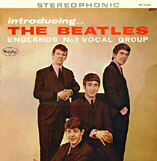
Corey held the Beatles album in his hand, staring at the
cover. There was a slight shadow to the George
Harrison’s right. Or was there?
Lightning flashed. He saw the shadow. Thump.
Thump. Thump went his heart and the rain. The first raindrops always toughest,
the heavy armor of the thunderstorm, the ones that couldn’t hang in the clouds
anymore, opening rips in the vapor for lighter, flightier drops to follow after,
The lightning ended. His eyes unadjusted, left the room dark. He felt the plastic sleeve that held the
record album in his hands, protecting it from the sweat. It was the last thing he had from the estate. Selling this would mean that everything was
memories.
“It’s not like I’ll
never hear a Beatles’ song again,” he said to himself.
Thunder did its thing without lightning ahead of it.
But he wouldn’t hear the Beatles’ songs the way he’d heard
them first, not ever again, if he sold this.
Coming from the big speakers of the hi-fi, Dad and Mom dancing, him sitting on
the edge of the couch watching them laugh.
Lightning flashed.
Handwritten on the cardboard sleeve: First dance, side A, song one.
Corey opened the plastic, took the record out, spun it on
his finger. “Well, she was just seventeen…” he whispered.
250=1 is short stories, all of which are exactly 250 words long, including the title. In this case, the story isn't just one of those, but is an entry in Cherie Reich's Second Annual Flash Fiction Blogfest:
“Did you ever wonder,” Tim said to Ayla one day in the hall
as they passed each other, “Why these
dead composers wrote all this music?”
Ayla just looked at him, unsure where this was going. She was never really clear on Tim’s points, and, sure, he’s cute, she’d sometimes tell her friends, but he’s so… obscure.
She tended to keep her cello between her and him, not out of fear
but as a way of keeping a little distance.
“No?” she asked him back.
“What if it was a message?” Tim wandered on, looking out the
window as he spoke. It was easy to keep
a distance from him, Ayla often realized, because he only looked at you, as he
talked, sparingly. Tim would stare out a
window as he said hi, or look at his
shoes as he asked how your weekend was, or fiddle with a pencil while talking
about a professor, and his eyes would slowly sneak over like a bird trying to
get from one side of the patio to the other while you were tanning on it, and
if they made contact with your eyes they would flicker away and start the
journey over.
“A message.” This one was not a question, but Tim went on
anyway.
“Maybe all this…” and he waved his hands in a way that could have
taken in the school, her cello, or maybe all the music, ever, but then he
stopped, and said “Never mind.”
And ordinarily I post on this blog about pop culture and what I think of it. But for today, since I have been running the Triweekly Star Wars Blogfest Writers' Challenge as
well -- winner gets $10! (yours is coming, Sandra) and since the
current challenge ends next week, on the 29th, I thought I'd enter
mine. The challenge is, for those who haven't been following, to write a
blog post of any sort -- picture, video, essay, quiz, jokey list, etc.
on the topic Han Shot First, But Time-Traveling Elvis Shot Second.
Han Shot First. No, He Didn't. Yes, He Did. Wait...
The judge glared at the witness.
"Please answer the question," he said, frowning.
"I'm not thure I can," the witness said around walrus-like teeth.
At
the defendant's table, the man in the sequined white jumpsuit leaned
over to his lawyer, whispered something, and flickerered briefly.
"Is there a problem?" the judge asked Time-Traveling Elvis' lawyer.
"No problem, your honor," the lawyer answered.
"I remember now! Han thot firtht!" the witness said.
Elvis sipped his water and looked thoughtful as the witness went on: "That's why I... wait... maybe he didn't."
The
lawyer and his client leaned forward and narrowed their eyes, almost
simultaneously. Elvis' lawyer looked at the prosecutor.
"Did you know," the prosecutor said, conversationally, "That traveling at lightspeed... or hyperspace... is almost exactly like time-travel?"
Elvis frowned.
On the witness stand, Walrus Tooth said "No, it wath Elvith! He jutht walked in and thot that green guy in cold blood."
The
judge was watching Elvis and later would swear to investigators that
the defendant had not even moved, except that suddenly Elvis was slimmer
than he had seemed at the start of the trial.
Now the prosecutor grimaced.
On the witness stand, Walrus Tooth said "I'm not thure why I'm here. I wath on vacation on Caprica at the time."
"This is ridiculous! We all know what's happening here!" yelled the prosecutor, banging his fist on the table.
One morning, a mother gave birth to a beautiful little daughter and said “Do you know, you might one day grow to rule this country!”
A treaty was made with the neighboring country, the one whose Princess had been turned down for a royal marriage. People there began to wonder why they had a royal family.
Citizens began asking why they ever had a monarchy in the first place and realized they could say that aloud.
Trade guilds flourished. Several artists began to experiment with other forms of painting. People decided they would choose among themselves for judges, and freed some prisoners who had been held simply for grudges.
He would never take the throne. The kingdom first crumbled into battling feudal territories before eventually climbing into a rude form of democracy.
The Prince was left broken-hearted, wandering around the Desolate Mountains – named that only after he took to them, because they took on his nature, so great was his sadness. The mountains echoed and mirrored his grief.
Then she died anyway, in his arms.
He broke off the kiss, and stared into her eyes, as if his hope, his desperation, his need and the troubles he had fought through alone could transfer to her a magic that did not exist.
But he kissed her anyway, for as long as he could do so before having to admit it was not working.
He knew it was futile.
The princess lay, not asleep, but nearly dead.
This Fairytale Was Told Backwards.
In 250=1, I write a short story that is exactly 250 words long, including the title. Find more of them here.
With a single tentacle-slap, Zith-Gar had managed to disarm Higgs.
The situation looked bleak.
“The situation looks bleak,” Higgs said to Zith-Gar, “But I’m not worried.”
“How can you NOT worry, Higgs?” asked Zith-Gar incredulously. “You are unarmed. I have three of my feet on your throat. Your precious Earth 2.0 is already 50% disintegrated! And you and I know, Higgs, that there is no coming back from that level of disintegration.”
“You’re going to stop all this, and release me,” Higgs said.
“I… never! Why would I ever do that?!” demanded Zith-Gar.
“Because,” Higgs said, “You’ll never kill your son-in-law.”
Zith-Gar looked down, all three of his eyes goggling. Both mouths gaped in awe.
“You DIDN’T!” it said.
“Look at my hand,” Higgs said. “No, the other one. You’ll see the wedding ring right there.”
“But, I thought… we’re not even the same species… and anyway, our mating rituals,” Zith-Gar muttered, warily looking down with his focusing eye at Higgs’ left hand. “It would kill you…”
There was no ring.
Zith-Gar straightened back up and saw that he was staring at the business end of a ray gun pointed directly at his central life organs. It looked powerful enough to pierce his pneumothorax.
“How…” it said.
“Simple,” Higgs said. “I’m Higgs Boson.” And he blasted Zith-Gar into trillions of pieces which somehow missed hitting him and left his uniform spotless. “And you never had a daughter,” he told the remnants of Zith-Gar.
I'm writing a series of stories that are exactly 250 words, including the title. Find more of them here. What Hannah Said When She Hugged Her Competitor
“And the actual retail price is… $25,671.”
Hannah had lost.
People cheering, models clapping, there was confetti or something falling maybe, she wasn’t sure, and then suddenly what’s-her-name Kassidie was grabbing her and hugging her.
“I’m so so so happy!” Kassidie said in her ear, bouncing up and down, holding tight to Hannah, who could not take her eyes off the package that would have included a trip to the Riviera.
“I’ll never go to the Riviera,” she whispered to Kassidie, who didn’t appear to hear at first and kept bouncing up and down and hugging her. “I’ll never use the new luggage to pack and get on a plane to go to a luxury hotel in whatever country the Riviera is in and then sit on whatever the Riviera is wearing my new diamond necklace.”
Kassidie’s jumping was slowing down.
“This was it,” Hannah continued. “I didn’t even know you ten minutes ago, and I didn’t have any idea ten minutes ago that I might be going to the Riviera. I now I hate you with a burning passion that scares me, and I’m sobbing inside for not going to the Riviera, and I don’t even know where that is.”
Kassidie stopped entirely and Hannah felt the other woman’s hands let go of her own back. She held on now.
“I know you want to stop hugging me,” Hannah said, “But I need you to keep on, for just a bit.”
So the Love? story today is actually not about love at all but about a very specific kind of emotion:
What Happens When The Symbolism Of McDonald’s Cheeseburgers Is Questioned?
AJ is afraid all the time but not in an overtly-crippling way. AJ fears he is too happy about some things, and not happy enough about others.
He confides this one day to Tiana.
Tiana serves (in her mind) as a de facto therapist but stands (in AJ’s mind) as a potential love interest in the story that would be his life if AJ ever gets around to writing that autobiography.
An autobiography of nothing, Tiana thinks, taking AJ’s coupon from him. AJ has a coupon every day.
“Why do you come here every day?” Tiana asks AJ.
“Would you like to go out sometime?” AJ responds.
“This isn’t even good food,” Tiana whispers back to him.
“It’s the best food,” AJ says, “In that it’s unique. Anyone can make a burger. Nobody can make a McDonald’s Cheeseburger except McDonald’s.”
“Why do you want to go out with me?” Tiana asks.
“I think it would make me just the right amount of happy,” AJ responds. “And I’ve asked you out now 14 times. So you should say yes.”
“You like unique stuff, huh?” Tiana asks him.
“Yes.”
“I’m a twin, you know.”
AJ has to think about that.
“And,” Tiana says, “Every McDonald’s cheeseburger is like every other McDonald’s cheeseburger.”
AJ looks down at his tray.
“So nothing,” Tiana says, “Is less unique than a McDonald’s cheeseburger.”
AJ does not know where to fit this new idea into his life.
It made you uncomfortable to be alone with him in the subway car, not just because he was mumbling loudly enough to seem he was trying to talk to you, complaining about how everyone knew his thoughts and did the stuff before he could.
“And the waffle iron? I came up with that!” he suddenly said ferociously, and you got off the car at the next stop because that little fleck of spittle in the corner of his mouth seemed too wild to want to deal with at 3:00 in the afternoon.
The job interview didn’t go well. You were still unnerved by the whole incident, and you were pretty sure that the waffle iron was older than the subway nut. The interviewer never called. Later on, even Gina’s encouragement (why don’t you just go ahead with that idea you had?) wasn’t enough to help you sleep and in your dreams you saw him again.
“EVERYBODY IN THE WORLD IS COPYING ME IN ADVANCE!” he yelled in your head, and it didn’t help that in the dream he was an extra on the set of Ocean Girl.
And you had to take the F train, two days later, to yet another job interview. He was there, of course, and he said “I’m going to invent an app that will scan the ears of small children and see if there is an ear infection.”
For the 74th time, on his 37th beach vacation, Kincaid walked the shore just after the tide went out. Alone on the beach, sand sifting into his sandals wetly, he shuffled along knowing he would not find what he was looking for.
Somewhere, in the past, which in his thoughts was a country he’d never visit no matter how many travelogues of it he watched, a little boy lay on the floor, a magazine spread out before him showing a glossy photo of a sea urchin and a crab in a tiny pool of water, trapped in the rocks after the tide went out. It was a private ocean, and Kincaid, like that little boy from the other country would, eventually, too, had spent his life looking for one.
Later today, he’d take Olivia to ride on roller-coasters. They would stop for pizza at that restaurant. But for now, Kincaid simply walked by himself, the taste of corn flakes on his breath. When he saw rocky outcroppings he climbed on them, carefully, watching where he put his hands and his feet, each time to no avail.
“Why do you get up so early?” Claudia asked him once on vacation. He’d shrugged. “I like to not waste time on vacation,” he’d said.
“Next year, maybe, we’ll go to the mountains,” Kincaid told the surf. But he knew it wasn’t true. There are 217,490 miles of coastline in the world, and he was not getting younger.
250=1 is a new challenge I've set for myself. (Note: although it's beginning to be posted in 2012, it's not a New Year's Resolution, as I never make New Year's Resolutions. Why postpone doing whatever it is you intend to do? No, I'm starting to post it now because I had too much other stuff to post last week between Christmas and New Year's, and so didn't get around to this.)
250=1 came about because I like writing long stories. The longer the better, as far as I'm concerned, because if I like a story I never want it to end. And so I decided to challenge myself, the way I once saw a giant, steep hill in Oakland, California and went jogging there just so I could try to jog up that hill, but in this case the challenge was to write short stories.
And not just any short story: A short story of exactly -- exactly -- 250 words.
Counting the title.
I'll be posting new ones from time to time, so check back often.




 Higgs Boson’s adventures in space: Episode 37:
 Day 3 of the I'm Hearing Voices blogfest is a happy coincidence for me: We're to write a 250 word story about an emotion, and this year I have been doing just that: Writing stories of exactly 250 words, including the title.
 What Happens When The Symbolism Of McDonald’s Cheeseburgers Is Questioned?
 What's this all about? Click here.
 Children's Magazines Are Full Of Lies.
 Page down for an explanation of this.
